
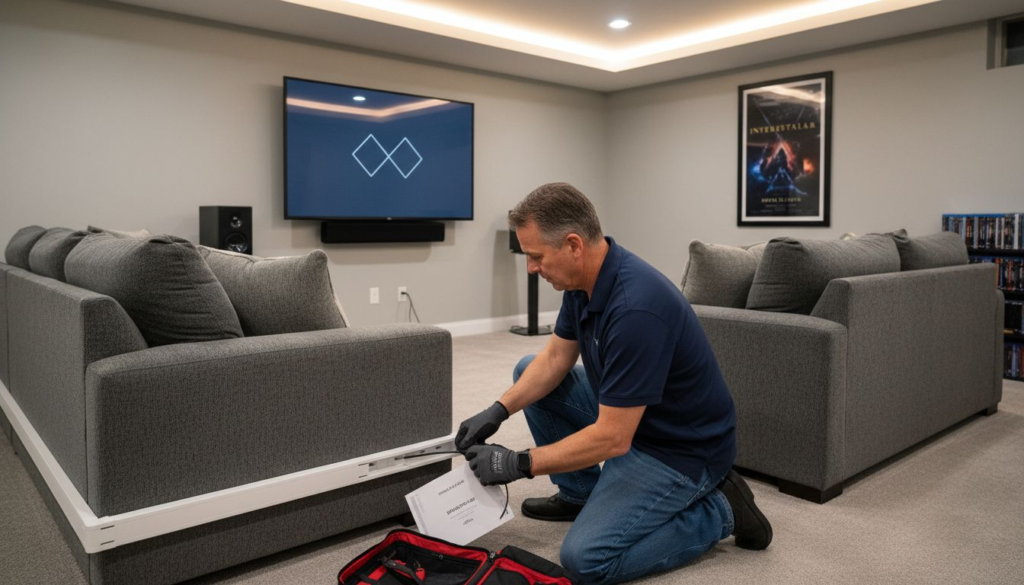
A clutter of wires is the last thing luxury-minded Atlanta homeowners want interfering with their custom home theater experience. The quest for a flawless entertainment space means every detail matters, especially when it comes to hiding cables and achieving crisp visual lines. By prioritizing a strategic wiring layout and proven concealment methods, you can elevate your home theater to match the sophistication of your entire residence while reducing both visual clutter and potential interference.
Table of Contents
- Step 1: Assess Wiring Layout And Placement
- Step 2: Choose Optimal Concealment Methods
- Step 3: Install Raceways Or In-Wall Solutions
- Step 4: Secure And Organize All Connections
- Step 5: Verify Hidden Wiring Performance
Quick Summary
| Key Point | Explanation |
|---|---|
| 1. Assess Wiring Layout First | Evaluate cable routes and obstacles to minimize visual clutter and ensure optimal signal performance in your home theater setup. |
| 2. Use Effective Concealment Methods | Choose methods like in-wall channels and raceways to hide the wiring while maintaining accessibility and protecting signal integrity. |
| 3. Install with Precision | Select and precisely install raceways or in-wall solutions to create a sleek, professional appearance in your home theater wiring. |
| 4. Organize All Connections | Secure and group cables with tools like cable ties and Velcro straps to prevent interference and maintain a clean aesthetic. |
| 5. Verify Wiring Performance | Conduct thorough testing of signal quality and continuity to ensure reliable and high-performance functioning of your concealed wiring. |
Step 1: Assess wiring layout and placement
Assessing your home theater’s wiring layout is the critical first step in creating a clean, professional installation. This process involves carefully mapping out potential cable routes to minimize visual clutter and ensure optimal signal performance.
Start by conducting a comprehensive visual inspection of your room. Take detailed measurements and note potential obstacles like furniture, wall studs, and existing electrical connections. Understanding your space’s unique characteristics will help you strategically plan cable pathways. Basic electrical house wiring principles recommend identifying logical routes that minimize cable length and potential interference.
Consider these key aspects when assessing your wiring layout:
- Wall cavity accessibility
- Distance between audio/video components
- Proximity to power outlets
- Potential for hidden cable channels
- Electrical interference zones
Professional home theater installations require meticulous planning to achieve a seamless, elegant result.
Pay special attention to cable management strategies that align with wiring track optimization techniques. This might involve creating dedicated conduits or using specialized raceways that blend seamlessly with your room’s aesthetic.
Pro tip: Always have a digital camera or smartphone ready to document your room’s layout, helping you reference potential cable routes during the installation process.
Step 2: Choose optimal concealment methods
Selecting the right concealment methods for your home theater wiring can transform a tangled mess into a sleek, professional installation. Your goal is to hide cables efficiently while maintaining accessibility and protecting signal integrity.
The key to successful wire concealment lies in understanding your room’s specific architectural features. Electrical wiring and air sealing techniques offer several strategic approaches to hiding cables discreetly. Consider these primary concealment options:
- In-wall cable channels
- Raceway systems
- Cable raceways
- Decorative wire covers
- Behind-furniture cable management
Professional installers know that effective wire concealment is both an art and a science.
Careful planning becomes crucial when implementing air sealing practices for electrical wiring. You’ll want to evaluate each potential route for minimal visual disruption and maximum performance. Wall cavities often provide the most seamless concealment, allowing cables to disappear completely behind drywall surfaces.
Pay special attention to compatibility with your room’s existing design. Some methods like paintable raceways can blend seamlessly with your wall color, creating an almost invisible cable management solution.
Here’s a comparison of common home theater wire concealment options and their benefits:
| Concealment Method | Aesthetic Impact | Accessibility for Upgrades | Installation Complexity |
|---|---|---|---|
| In-wall cable channel | Virtually invisible | Low, may require drywall cut | High |
| Raceway system | Matches decor with covers | Moderate, easy to open | Moderate |
| Decorative wire cover | Blends, adds design | Easy to remove/replace | Low |
| Behind furniture | Hidden from view | Easy, move furniture | Low |
Pro tip: Invest in flexible cable management systems that allow future adjustments, ensuring your concealment method remains adaptable to potential home theater upgrades.
Step 3: Install raceways or in-wall solutions
Installing raceways or in-wall solutions is your key to creating a professional, clutter-free home theater environment. This critical step transforms messy cable runs into a seamless, integrated wiring system that looks intentional and sophisticated.
Begin by carefully selecting the appropriate raceway system for your specific setup. Raceway installation standards recommend understanding your specific requirements before beginning installation. Consider these crucial factors when choosing your concealment method:
- Compatibility with wall material
- Cable thickness and quantity
- Required access points
- Aesthetic considerations
- Potential future expansion needs
Precision in raceway installation separates amateur setups from professional home theaters.
When implementing your chosen solution, follow electrical wiring safety regulations meticulously. Proper electrical continuity is paramount, which means ensuring all connections are secure and properly grounded. Metal raceways offer excellent protection and can help minimize electromagnetic interference between your audio and video cables.
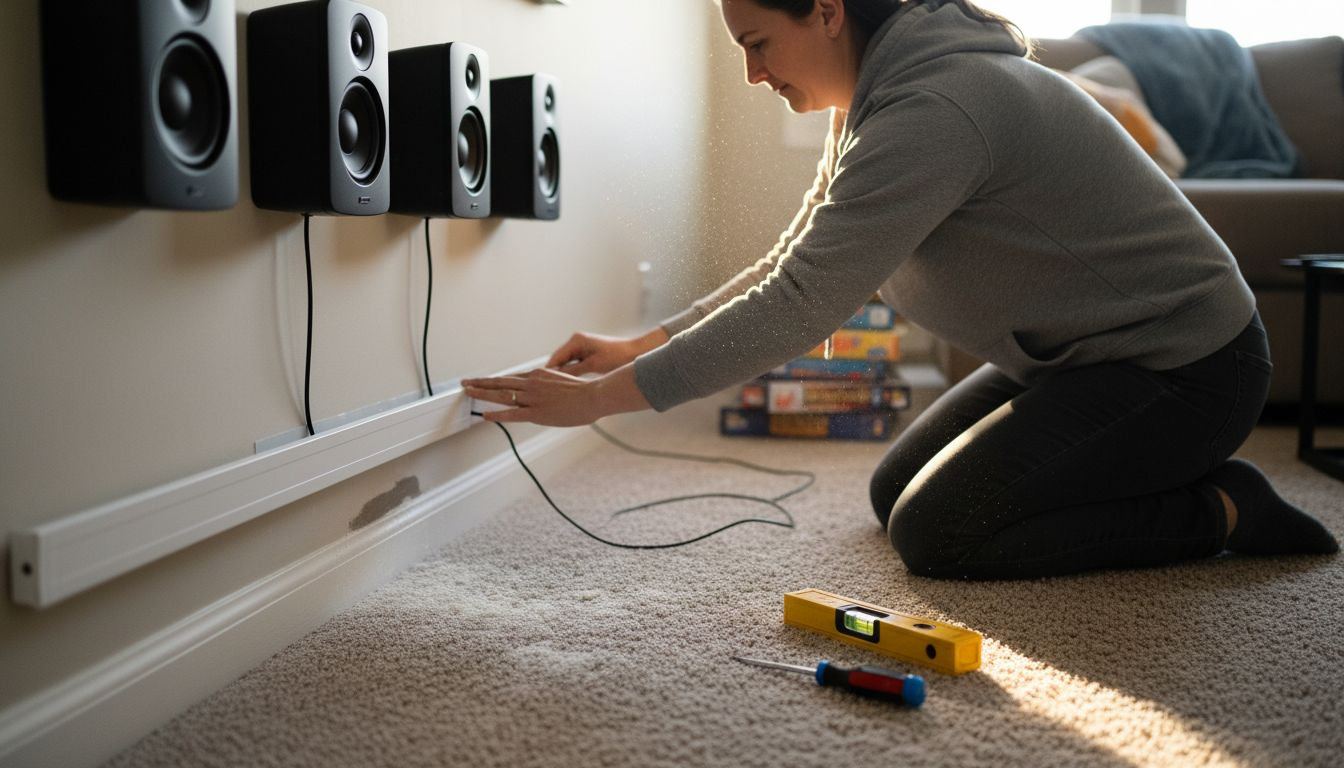
Pay close attention to cutting precise holes and maintaining clean, professional lines. Use specialized tools like a drywall saw or rotary tool to create smooth, accurate openings for your raceway system. Remember that clean installation is just as important as the concealment method itself.
Pro tip: Always test-fit your raceway system before final installation, and keep a small buffer of extra cable length to accommodate potential future equipment upgrades.
Step 4: Secure and organize all connections
Securing and organizing your home theater connections is the critical final step in creating a professional, high-performance wiring setup. This process ensures signal integrity, prevents potential interference, and maintains the clean aesthetic you’ve worked hard to achieve.
Network connection security principles emphasize the importance of systematic cable management. Start by grouping similar cables together and using appropriate fastening techniques. Consider these key organization strategies:
- Velcro cable straps
- Cable clips
- Heat shrink tubing
- Cable ties
- Adhesive cable mounts
A well-organized cable system is the hallmark of a professional home theater installation.
Pay special attention to cable tension and positioning when implementing electrical wiring organization techniques. Avoid excessive stress on connections by allowing slight slack and using strain relief methods. Different cable types require different handling techniques – audio cables, power cords, and HDMI connections each have unique considerations for optimal performance.
Use cable management tools that protect against physical damage and electromagnetic interference. Color-coded cable ties or labels can help you track complex connection routes, making future maintenance and upgrades significantly easier.
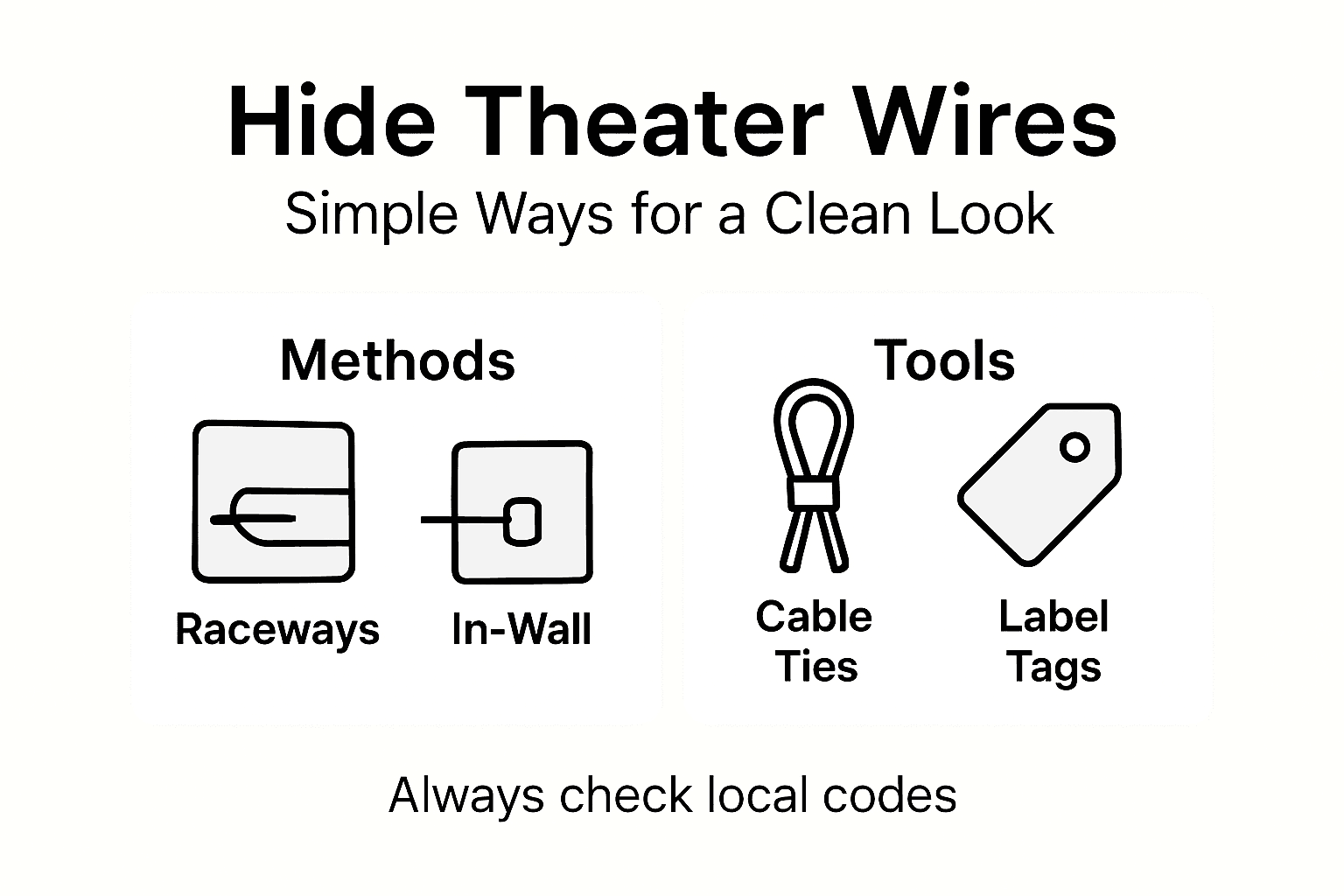
The table below summarizes essential cable management tools and their specific advantages:
| Tool | Use Case | Advantage |
|---|---|---|
| Velcro straps | Bundling flexible cables | Adjustable, reusable |
| Heat shrink tubing | Insulating connections | Durable protection |
| Adhesive cable mounts | Securing to surfaces | Quick install |
| Color-coded ties | Identifying cable groups | Easier maintenance |
Pro tip: Invest in a high-quality cable management kit with various sizes of straps and clips to ensure maximum flexibility during your installation.
Step 5: Verify hidden wiring performance
Verifying the performance of your newly concealed home theater wiring is the final critical step in ensuring a professional, reliable installation. This process goes beyond visual inspection to confirm that every cable functions perfectly within its hidden environment.
Electrical wiring and air sealing techniques emphasize the importance of comprehensive system testing. Develop a systematic verification approach by checking these key performance indicators:
- Signal quality tests
- Continuity measurements
- Interference resistance
- Voltage stability
- Thermal performance
Thorough testing transforms a good installation into an exceptional home theater experience.
Follow a detailed testing protocol using home performance assessment methods. Start by connecting all components and running diagnostic tests that check audio and video signal transmission. Use professional-grade cable testers to verify each connection’s integrity, paying special attention to signal strength and clarity.
Consider using a multimeter to check for any unexpected resistance or voltage drops that might indicate potential connection issues. Listen carefully for any audio artifacts or watch for video signal inconsistencies that could suggest underlying wiring problems.
Pro tip: Perform your verification tests during different times of day and under various load conditions to ensure consistent performance across all scenarios.
Create a Flawless Home Theater Setup with Expert Wiring Solutions
Hiding your home theater wiring is essential to achieve that pristine, professional look outlined in the article. Challenges like cable management, cable concealment methods, and secure connection organization require precise planning and skilled execution. Avoid common pitfalls such as messy cable runs or interference issues by applying proven techniques like in-wall cable channels and raceway installations. Atlanta Home Theater understands these pain points deeply and offers tailored solutions that make your home entertainment system both visually stunning and technically flawless.
Discover how our team of 40+ specialists can transform your space with expert wiring concealment that aligns with your room’s unique design and performance needs. Whether you need a dedicated private cinema or sophisticated smart home integration, we provide seamless installation adhering to the highest standards highlighted in the article. Don’t let wiring complexity compromise your experience. Visit Atlanta Home Theater now to schedule your consultation. Let us help you create an immersive home theater with expert cable management, clean raceway installation, and reliable system verification for lasting performance.
Frequently Asked Questions
How can I assess my home theater wiring layout effectively?
Start by conducting a thorough visual inspection of your room. Measure distances, note obstacles, and identify optimal cable routes to minimize visual clutter and ensure signal performance.
What are the best concealment methods for hiding home theater wiring?
Consider using in-wall cable channels, raceway systems, or decorative wire covers. Choose a method that blends with your room’s aesthetic while ensuring easy access for future upgrades.
How do I install raceways or in-wall solutions for my home theater cables?
Begin by selecting the appropriate raceway system that suits your installation needs. Follow installation guidelines carefully, making sure to ensure proper electrical safety and continuity for optimal performance.
What are effective ways to secure and organize my home theater connections?
Use tools like Velcro cable straps, cable clips, and adhesive mounts to keep your cables tidy and secure. Group similar cables together to simplify future maintenance and upgrades, ensuring easy access when needed.
How can I verify the performance of hidden wiring in my home theater?
Conduct systematic signal quality tests and check continuity on all connections. Use a multimeter to measure resistance and ensure your system delivers optimal audio and video signal quality under different conditions.