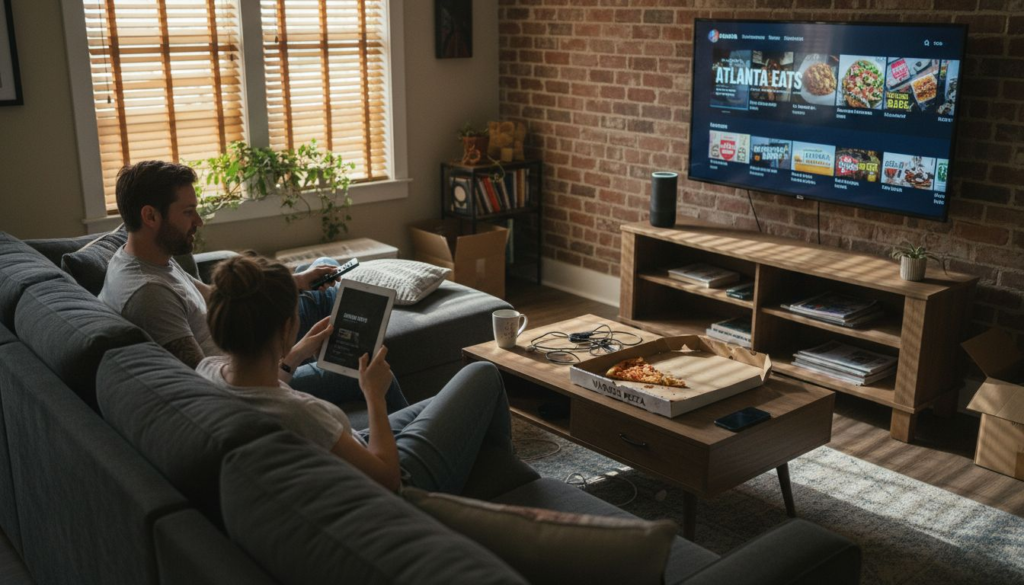
Stepping into your Atlanta home after a long day, you expect relaxation and entertainment to unfold at the touch of a button. Smart entertainment systems are redefining luxury living by offering effortless control and tailored experiences for every family member. From home theaters that anticipate your preferences to indoor golf simulators that feel truly immersive,
advanced smart technology brings convenience, personalization, and seamless connectivity right into your living space. Discover how these innovations can elevate both comfort and enjoyment in your home.
Table of Contents
Key Takeaways
| Point |
Details |
| Smart Entertainment Integrates Technology |
Smart entertainment combines various technologies to create immersive and responsive media experiences in homes. |
| Focus on Compatibility and Interoperability |
When investing in smart entertainment systems, prioritize devices that can work seamlessly together to enhance user experience. |
| Consider Risks and Costs |
Be aware of potential privacy concerns, high initial costs, and the need for ongoing maintenance when adopting smart entertainment technologies. |
| Customization Enhances User Experience |
Tailor your smart entertainment solutions to personal preferences to transform ordinary media consumption into a dynamic experience. |
Smart Entertainment Defined and Core Concepts
Smart entertainment represents a technological revolution transforming how we experience media and digital interactions within our living spaces.
Advanced technologies in home entertainment integrate sophisticated systems that deliver unprecedented convenience and personalization.
At its core, smart entertainment encompasses interconnected digital technologies designed to create immersive, responsive experiences. These systems leverage several critical components:
- Voice-controlled speakers and interfaces
- Intelligent streaming platforms
- IoT-enabled gaming consoles
- AI-driven content recommendation engines
- Automated home theater systems
The fundamental philosophy behind smart entertainment revolves around three key principles:
accessibility,
personalization, and
seamless connectivity. Modern systems allow users to control entire media environments through simple voice commands or smartphone applications, breaking down traditional barriers between technology and user experience.
IoT integration in entertainment systems enables devices to communicate intelligently, creating adaptive environments that learn and respond to individual preferences. Imagine a home theater that automatically adjusts lighting, temperature, and audio settings based on your watching habits – that’s the promise of smart entertainment.
Pro Tip: When designing a smart entertainment setup, prioritize compatibility and invest in systems that can communicate with each other to create a truly integrated experience.
Types of Smart Entertainment Solutions
Smart entertainment solutions have evolved dramatically, transforming how homeowners experience digital media and interactive technologies.
IoT-enabled entertainment systems now encompass a wide range of sophisticated devices designed to create personalized, immersive experiences.
The most prevalent types of smart entertainment solutions include:
- Voice-controlled assistants like Amazon Alexa and Google Home
- Smart streaming devices such as Roku and Apple TV
- Automated home theater systems
- Multi-room audio networks
- Smart TVs with integrated intelligent platforms
- IoT gaming consoles with advanced connectivity
- Virtual reality headsets
Connected entertainment devices provide unprecedented levels of interaction and personalization. Modern systems can learn user preferences, automatically recommend content, and seamlessly integrate across multiple platforms and devices. This technological convergence allows for unprecedented control and customization of home entertainment experiences.
Beyond individual device capabilities, these solutions create comprehensive ecosystems that communicate and respond intelligently. Imagine walking into a room where your preferred lighting, temperature, and music automatically adjust based on your historical preferences – that’s the transformative potential of smart entertainment technologies.
Here’s how smart entertainment solutions differ by focus and user impact:
| Solution Type |
Primary Benefit |
Typical User Experience |
Integration Complexity |
| Voice-controlled Assistants |
Hands-free control |
Quick device management |
Low, easy setup |
| Smart Streaming Devices |
Broad content access |
Personalized viewing options |
Moderate, depends on platform |
| IoT Gaming Consoles |
Interactive play |
Enhanced multiplayer features |
High, requires compatible network |
| Automated Home Theater |
Immersive media |
Customizable atmosphere |
High, multi-device coordination |
| Virtual Reality Headsets |
Full immersion |
Unique entertainment journeys |
Moderate, user adaptation needed |
Pro Tip: When selecting smart entertainment solutions, prioritize interoperability and choose devices that can communicate with each other to create a truly integrated home experience.
Key Features and How Systems Work
Smart entertainment systems represent a sophisticated network of interconnected technologies designed to create seamless, intelligent media experiences. IoT-based entertainment platforms leverage advanced connectivity and artificial intelligence to transform how users interact with digital content.
The core architectural components of these systems typically include:
- Network Connectivity Protocols
- Wi-Fi
- Bluetooth
- Zigbee
- Thread networking
- Smart Device Integration
- Smart speakers
- Connected televisions
- Streaming devices
- Gaming consoles
- Intelligence Layers
- Machine learning algorithms
- Personalization engines
- Content recommendation systems
These systems operate through intricate communication protocols that enable devices to share information, learn user preferences, and automatically adjust settings. The underlying technology uses sensors, data processing algorithms, and cloud-based platforms to create dynamic, responsive entertainment environments that anticipate and adapt to individual user needs.
By combining advanced connectivity, artificial intelligence, and intuitive user interfaces, smart entertainment systems transcend traditional media consumption. They transform passive viewing into an interactive, personalized experience that responds to user behavior, preferences, and contextual cues in real-time.
Pro Tip: Invest in devices with robust cross-platform compatibility to ensure a seamless and future-proof smart entertainment ecosystem.
Real-World Applications for Atlanta Homes
Smart entertainment technologies are transforming residential experiences across Atlanta, offering homeowners unprecedented ways to enhance their living spaces.
Outdoor entertainment systems have become particularly popular, allowing residents to create sophisticated multimedia environments both inside and outside their homes.
Atlanta homeowners are implementing smart entertainment solutions in multiple key areas:
- Indoor Home Theaters
- Automated surround sound systems
- 4K and 8K video projection
- Integrated streaming capabilities
- Outdoor Entertainment Zones
- Weatherproof televisions
- App-controlled landscape lighting
- Built-in sound systems
- Multi-Room Audio Networks
- Synchronized music streaming
- Zone-based volume controls
- Voice-activated playlist management
These advanced systems go beyond traditional entertainment by creating intelligent, responsive environments. They can automatically adjust lighting, temperature, and audio settings based on user preferences, time of day, and specific activities. The technology transforms living spaces into dynamic, personalized experiences that adapt to individual lifestyles.
Whole-home integration represents the next frontier of smart entertainment, allowing seamless communication between different technological systems. By connecting entertainment platforms with home automation, security, and climate control, Atlanta homeowners can create truly intelligent living environments that enhance comfort, convenience, and enjoyment.
For Atlanta homeowners, whole-home entertainment integration can connect multiple smart systems for streamlined living:
| Integration Aspect |
Benefit for Residents |
Example Application |
| Device Interoperability |
Full-home control |
One app manages all devices |
| Automated Responsiveness |
Personalized comfort |
Music and lighting adjust for mood |
| Outdoor System Integration |
Extended entertainment |
Movie night in the backyard |
| Upgrade Scalability |
Future technology-proof |
Easily add new smart devices |
Pro Tip: Consider working with local integration specialists who understand Atlanta’s unique residential technologies and can design customized smart entertainment solutions.
Risks, Costs, and Common Pitfalls
Smart entertainment technologies offer tremendous potential, but homeowners must carefully navigate potential challenges.
AI integration risks demand thoughtful consideration to ensure a secure and beneficial technological investment.
The primary risks and challenges associated with smart entertainment systems include:
- Privacy Concerns
- Unauthorized data collection
- Potential personal information breaches
- Invasive tracking mechanisms
- Financial Considerations
- High initial installation costs
- Ongoing maintenance expenses
- Rapid technological obsolescence
- Technical Vulnerabilities
- Cybersecurity exposure
- System compatibility issues
- Potential network disruptions
Smart technology challenges extend beyond technical limitations, encompassing broader social and ethical dimensions. These systems can create unintended digital divides, potentially excluding individuals who lack technological access or understanding.
Budget-conscious homeowners should approach smart entertainment investments strategically. While initial costs can be significant, selecting scalable systems with robust upgrade paths can mitigate long-term expenses. Professional consultation can help identify solutions that balance technological sophistication with practical financial considerations.
Pro Tip: Prioritize systems with strong manufacturer support, comprehensive warranties, and clear upgrade paths to protect your technological investment.
Elevate Your Home with Smart Entertainment Solutions
The challenges highlighted in “What Is Smart Entertainment and Its Impact” reflect the complexity of creating truly integrated, personalized media environments. Many homeowners face issues like device compatibility, privacy concerns, and the need for seamless connectivity across indoor and outdoor spaces. At Atlanta Home Theater, we understand these pain points and specialize in transforming your vision into reality by leveraging cutting-edge technologies like automated lighting, multi-room audio, and smart home integration.
Imagine controlling your entire entertainment ecosystem with ease while enjoying immersive private cinemas or sophisticated outdoor entertainment zones tailored just for you. Our team of over 40 professionals guides you through every detail to avoid common pitfalls, ensuring your investment is secure, scalable, and optimized for comfort and style. Discover how our customized
home theater solutions and expert integration services can bring your smart entertainment dreams to life.
Ready to upgrade your living space and experience the true potential of smart entertainment? Connect with our experts today at Atlanta Home Theater to schedule your personalized consultation. Unleash immersive experiences, effortless control, and whole-home integration that adapts to your lifestyle now.
Frequently Asked Questions
What is smart entertainment?
Smart entertainment refers to a technological ecosystem that integrates advanced digital technologies to create immersive and interactive media experiences. It includes voice-controlled devices, smart streaming platforms, and AI-driven content recommendations.
How does smart entertainment enhance user experiences?
Smart entertainment enhances user experiences by providing accessibility, personalization, and seamless connectivity. Users can control media environments through voice commands or mobile apps, creating customized settings that adapt to their preferences.
What are the key components of a smart entertainment system?
Key components of a smart entertainment system include voice-controlled assistants, smart streaming devices, IoT gaming consoles, automated home theater systems, and AI-driven content recommendation engines that work together to deliver personalized experiences.
What are the potential risks associated with smart entertainment technologies?
Potential risks associated with smart entertainment include privacy concerns from unauthorized data collection, high initial installation and maintenance costs, cybersecurity vulnerabilities, and possible compatibility issues among different devices.
Recommended