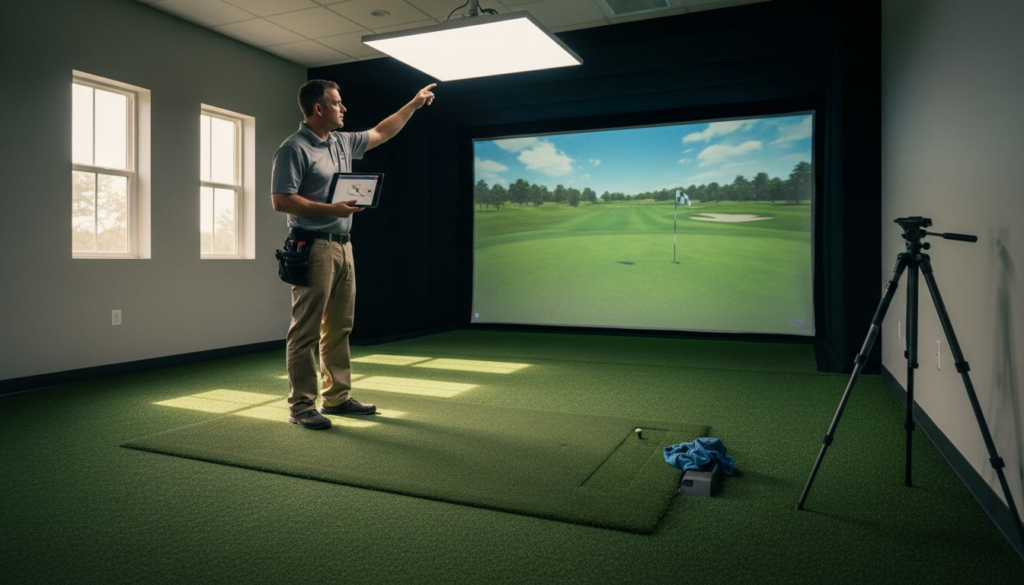
Flawless golf simulation in your home means every detail matters, including lighting. Traditional setups often leave players battling glare and uneven brightness, which can disrupt gameplay and spoil the immersive feel. By upgrading to an
automated lighting system powered by AI and IoT technologies, you unlock real-time, intelligent control that precisely tunes illumination for different play scenarios. This guide uncovers how these smart solutions elevate both performance and ambiance in your custom entertainment space.
Table of Contents
Key Takeaways
| Point |
Details |
| Automated Lighting Enhances Experience |
Automated lighting systems adjust illumination dynamically, creating immersive indoor golf simulator environments. |
| Diverse Lighting Types Recommended |
Utilize a combination of LED overhead, track lighting, spotlights, and wall sconces for optimal conditions. |
| Smart Controls Improve Functionality |
Smart features like occupancy detection and color temperature control adapt lighting to user preferences. |
| Safety in Installation is Critical |
Professional installation ensures electrical safety and optimal performance of automated lighting systems. |
Automated Lighting Systems for Simulators Defined
Automated lighting systems represent a sophisticated technological solution designed to transform indoor golf simulator experiences by dynamically adjusting illumination to enhance realism and player engagement. These intelligent systems go far beyond traditional static lighting setups, leveraging advanced sensor technologies and machine learning algorithms to create immersive environments that closely mimic real-world golf course conditions.
The core functionality of modern automated lighting systems hinges on their ability to
intelligently adapt to environmental conditions. By integrating AI and Internet of Things (IoT) technologies, these systems can perform real-time adjustments that respond to multiple input parameters:
- Ambient light levels
- Player positioning
- Simulator screen brightness
- Time of day
- Desired visual simulation mood
At the technological heart of these systems are specialized sensors and machine learning algorithms that enable
dynamic illumination control. These components work in concert to analyze multiple environmental factors, allowing the lighting to shift seamlessly between different modes – from bright midday sunlight simulation to soft evening course conditions.
Advanced sensor networks capture granular data points about the simulator environment, enabling precise lighting adjustments. This technology allows for incredible nuance in recreating authentic golf course lighting scenarios, transforming a home simulator from a basic screen setup into an immersive experience that feels remarkably close to playing outdoors.
Automated lighting systems represent the future of indoor simulator technology, bridging the gap between artificial environments and realistic sensory experiences.
Pro tip: Invest in a system with machine learning capabilities that can remember and automatically adjust to your preferred lighting configurations for different times of day and play scenarios.
Lighting Types Suited for Indoor Golf Spaces
Creating the perfect lighting environment for indoor golf simulators requires a strategic approach that balances technical precision with visual comfort.
Specialized lighting solutions are critical in transforming a home simulator space into a realistic golfing experience that mimics natural course conditions.
The most effective indoor golf simulator lighting systems typically incorporate multiple lighting types:
- LED Overhead Lighting: Provides uniform, bright illumination
- Track Lighting: Offers flexible positioning and adjustable angles
- Spotlights: Creates focused illumination on specific areas
- Wall Sconces: Adds ambient lighting without screen interference
Color temperature plays a crucial role in simulator lighting design.
Neutral white light between 4000-5000K closely approximates natural daylight, creating an optimal visual environment that supports accurate ball tracking and screen visibility. This specific color range helps minimize eye strain while maintaining the crisp, clear imagery necessary for an immersive simulator experience.
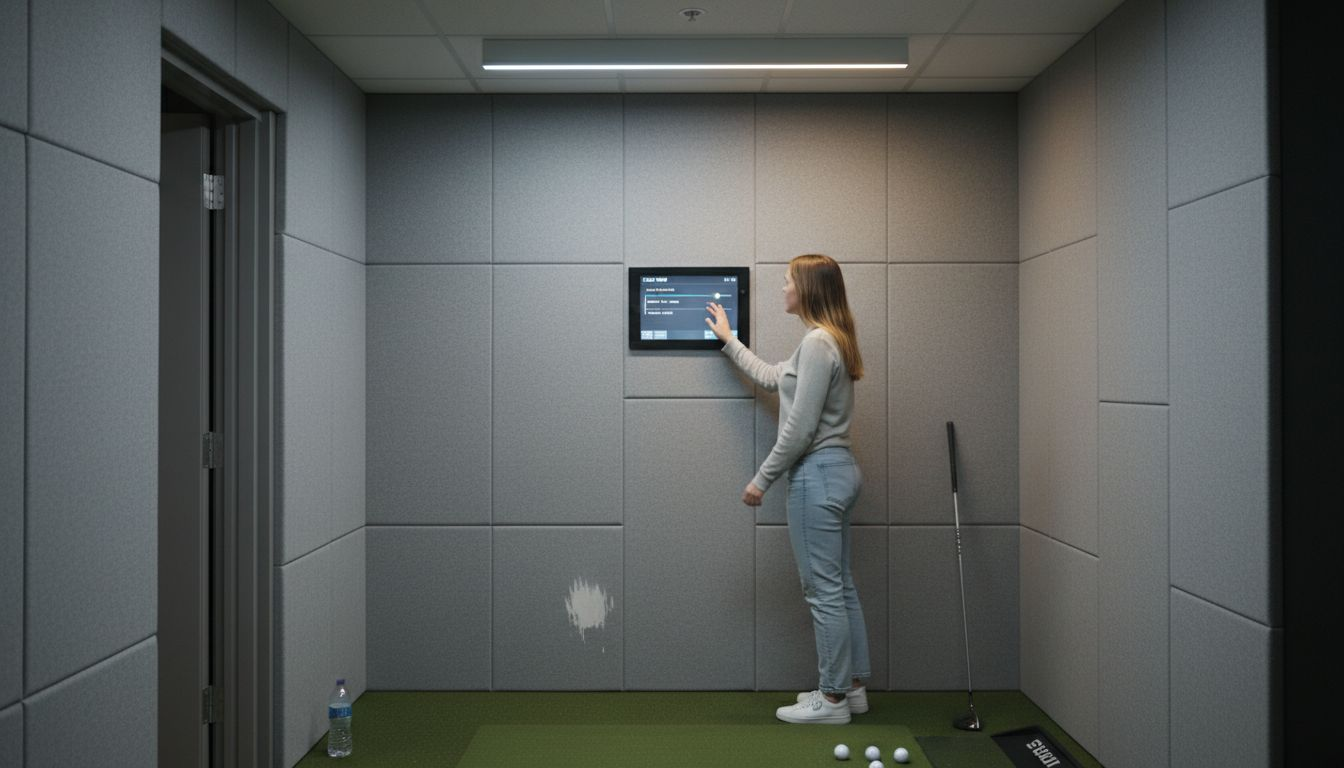
Zoned lighting strategies are essential for managing light distribution and preventing projection screen washout. By separating task lighting from ambient illumination, golfers can achieve precise control over their simulator’s visual environment. Strategically positioned lights that avoid casting shadows on the impact screen ensure consistent, glare-free visibility across different simulation scenarios.
Here’s a comparison of lighting types and their roles in an indoor golf simulator:
| Lighting Type |
Primary Role |
Visual Impact |
| LED Overhead Lighting |
Broad, even illumination |
Reduces shadows |
| Track Lighting |
Adjustable light direction |
Highlights user zones |
| Spotlights |
Focused area lighting |
Accentuates play areas |
| Wall Sconces |
Adds ambient glow |
Enhances comfort |
Effective simulator lighting is not just about brightness, but about creating a seamless visual experience that feels natural and engaging.
Pro tip: Invest in dimmable, adjustable LED lighting systems with multiple color temperature settings to create the most versatile indoor golf environment.
Smart Controls and Customization Features Explained
Modern indoor golf simulator lighting systems have evolved far beyond simple on-off switches, integrating advanced multi-modal sensing technologies that transform the entire lighting experience. These sophisticated systems leverage intelligent algorithms to create dynamic, responsive environments tailored precisely to a golfer’s preferences and gameplay requirements.
Key customization features of smart lighting controls include:
- Occupancy Detection: Automatically adjusts lighting based on player presence
- Ambient Light Sensing: Dynamically modifies brightness levels
- Color Temperature Adjustment: Shifts light spectrum to match time of day
- Remote Control Capabilities: Enables smartphone or tablet management
- Scene Preset Programming: Stores multiple lighting configurations
Sensor Integration represents the core technological advancement in these systems. By combining motion detectors, light sensors, and user interface technologies, smart lighting can create nuanced environments that respond instantaneously to changing conditions. These systems go beyond simple illumination, acting as intelligent partners that anticipate and adapt to a golfer’s specific needs.
The most advanced systems incorporate machine learning algorithms that progressively understand user preferences. Over time, the lighting setup can automatically adjust based on historical usage patterns, time of day, and individual player behaviors. This creates a truly personalized simulator experience that feels intuitive and seamlessly responsive.
Use this table to select key smart lighting features for improved gameplay experience:
| Feature |
How It Enhances Play |
Customization Level |
| Occupancy Detection |
Lights activate when needed |
Fully automated |
| Color Temperature Control |
Matches daylight variations |
User-adjustable presets |
| Scene Presets |
One-touch mood setting |
Saves player preferences |
| Remote App Control |
Adjust from any location |
Mobile & tablet compatible |
Smart lighting is not just about visibility – it’s about creating an immersive, adaptive environment that enhances the entire simulator experience.
Pro tip: Prioritize lighting systems with machine learning capabilities and comprehensive sensor networks to ensure the most dynamic and personalized indoor golf environment.
Enhancing Gameplay and Realism with Lighting
Lighting plays a transformative role in creating immersive indoor golf simulator experiences, going far beyond simple illumination. Intelligent lighting systems dynamically manipulate visual environments to craft emotionally engaging and hyper-realistic gameplay scenarios that captivate players from the moment they step into the simulator.
Key strategies for enhancing realism through lighting include:
- Directional Lighting: Mimics natural sunlight and course conditions
- Dynamic Color Temperature: Shifts to match time of day and weather scenarios
- Shadow Simulation: Creates depth and visual complexity
- Mood Lighting: Adjusts emotional tone of the playing experience
- Interactive Lighting: Responds to player actions and shot outcomes
Emotional Engagement represents the most sophisticated aspect of simulator lighting design. By carefully choreographing light intensity, color, and movement, these systems can create psychological responses that make players feel deeply connected to the virtual environment. Subtle shifts in lighting can communicate subtle nuances – from the tension of a challenging shot to the relaxed atmosphere of a practice session.
The most advanced simulator lighting technologies utilize machine learning algorithms to continuously adapt and personalize the visual experience. These systems analyze player preferences, time of day, and gameplay patterns to create lighting scenarios that feel intuitive and uniquely tailored to individual golfers. The result is an experience that transcends traditional simulator limitations, offering a sense of immersion that feels remarkably close to playing on an actual golf course.
Lighting is not just about visibility – it’s about creating a narrative, an emotional journey that transforms a simple room into an extraordinary golfing adventure.
Pro tip: Invest in lighting systems with adaptive AI capabilities that can learn and evolve your simulator’s visual experience over time.
Installation, Safety, and Integration Considerations
Installing automated lighting systems for indoor golf simulators demands meticulous planning and technical expertise.
Modular plug-and-play systems offer efficient integration strategies that minimize disruption and streamline the entire implementation process, ensuring seamless performance and minimal downtime.
Key installation and safety considerations include:
- Electrical Infrastructure Assessment: Evaluate existing wiring capabilities
- Sensor Placement Optimization: Strategically position motion and light sensors
- Emergency Lighting Provisions: Install backup safety illumination systems
- Thermal Management: Ensure proper heat dissipation for electronic components
- Voltage Compatibility: Confirm electrical system requirements match lighting technology
Electrical Safety represents the most critical aspect of simulator lighting installation. Professional technicians must adhere to strict electrical codes, implement robust grounding mechanisms, and design systems with multiple fail-safe protocols. This approach prevents potential electrical hazards while ensuring consistent, reliable performance across complex simulator environments.
Advanced integration techniques leverage cutting-edge technologies like IoT and AI to create intelligent, adaptive lighting networks. These systems go beyond traditional installation methods, offering dynamic configuration capabilities that can automatically adjust to changing environmental conditions and user preferences. The result is a lighting solution that feels intuitive, responsive, and seamlessly integrated into the overall simulator experience.
Successful lighting integration is not just about technical implementation, but creating a holistic system that enhances safety, performance, and user experience.
Pro tip: Always consult certified electrical professionals who specialize in smart home and simulator technology to ensure optimal safety and performance during installation.
Elevate Your Indoor Golf Simulator with Expert Automated Lighting Solutions
The article highlights the challenge of creating realistic and immersive indoor golf simulator environments through advanced automated lighting systems. Key goals include dynamic illumination control, sensor integration, and personalized smart lighting features that adapt to changing conditions and user preferences. If you are looking to eliminate shadows, optimize color temperature, and enhance emotional engagement with adaptive AI-driven lighting, you need a lighting system expertly designed and seamlessly integrated for your space.
At Atlanta Home Theater, we understand these specific pain points and deliver custom smart lighting solutions tailored for indoor simulators. Our team combines state-of-the-art sensor networks and machine learning capabilities to provide an experience that truly mirrors outdoor golf conditions. Complement your simulation with comprehensive smart home integration, automated shades, and professional installation to ensure safety and top performance. Explore valuable insights and ideas in our
Sound Advice Archives – Atlanta Home Theater and see how we can transform your space.
Ready to bring your indoor golf simulator to life with precision lighting and immersive ambiance? Visit Atlanta Home Theater now to schedule a personalized consultation. Let our experts guide you through every step to make your simulator not just functional but a captivating, realistic experience you will enjoy day after day.
Frequently Asked Questions
What are automated lighting systems for indoor golf simulators?
Automated lighting systems are advanced technological solutions designed to enhance the indoor golf simulator experience by dynamically adjusting lighting in real-time, making it more realistic and engaging for players.
How do automated lighting systems improve realism in indoor golf simulators?
These systems use sensors and machine learning to mimic natural lighting conditions by adjusting brightness, color temperature, and illumination based on factors like ambient light, player positioning, and time of day, creating a more immersive playing environment.
What types of lighting are best suited for indoor golf simulators?
The most effective types of lighting for indoor golf simulators include LED overhead lighting for uniform illumination, track lighting for flexibility, spotlights for focused areas, and wall sconces for ambient lighting, all working together to minimize shadows and enhance visual comfort.
What key features should I look for in smart lighting controls for golf simulators?
Look for features such as occupancy detection, ambient light sensing, color temperature adjustment, remote control capabilities, and scene preset programming to create a responsive and personalized lighting experience that adapts to your playing preferences.
Recommended