
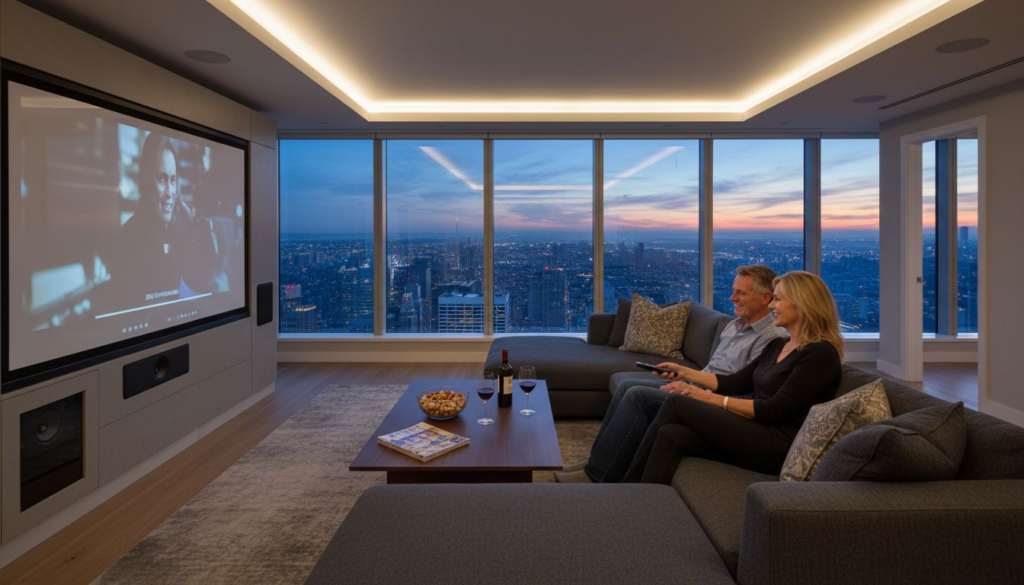
More than 60 percent of American luxury homeowners now seek seamless integration between entertainment systems and smart home controls. In Atlanta, sophisticated living means expecting technology to fade softly into the background while still delivering unforgettable experiences for family and guests. Discover how the latest in home theater design and intelligent environments transforms personal spaces into exclusive retreats, setting a new standard for comfort, style, and modern american living.
Table of Contents
- Defining Integrated Entertainment In Luxury Homes
- Core Systems: Home Theaters, Audio, And More
- Smart Home Automation And Unified Control
- Personalization And Lifestyle Enhancements
- Risks, Costs, And Comparing Alternatives
Key Takeaways
| Point | Details |
|---|---|
| Integrated Entertainment | Modern luxury homes utilize integrated entertainment systems that create immersive experiences through technology synergy. These systems offer tailored setups that reflect individual homeowner preferences. |
| Core Technologies | Investment in sophisticated systems such as home theaters and distributed audio is crucial to achieving high-quality audio-visual experiences. Comprehensive control mechanisms enhance user enjoyment through seamless interactions. |
| Smart Home Automation | Advanced smart home automation systems leverage AI to create adaptive living environments, responding intuitively to occupant needs. Homeowners should seek scalable solutions that ensure future compatibility. |
| Financial Considerations | Evaluating the costs, maintenance, and risks associated with integrated entertainment systems is essential for making informed investment decisions. Prioritize modular and upgradeable systems to mitigate obsolescence risks. |
Defining Integrated Entertainment in Luxury Homes
Integrated entertainment transcends traditional audiovisual setups by creating immersive, personalized technological ecosystems within luxury homes. This sophisticated approach transforms living spaces into dynamic environments that anticipate and respond to homeowners’ desires. Luxury home technology now represents an intricate fusion of design, functionality, and individualized experience.
At its core, integrated entertainment involves seamlessly connecting multiple technological systems to deliver exceptional sensory experiences. These advanced setups go far beyond standalone devices, incorporating smart home controls, high-resolution displays, distributed audio networks, and intuitive interfaces that blend aesthetically with the home’s architectural design. The goal is creating environments where technology becomes invisible yet omnipresent, responding effortlessly to occupants’ preferences.
The hallmark of true integrated entertainment lies in its customization. Personalized technological interactions allow homeowners to craft unique entertainment landscapes that reflect individual tastes and lifestyles. This might include climate-synchronized lighting during movie experiences, automated scene transitions between entertainment zones, or intelligent audio systems that follow users throughout their living spaces. Modern luxury homeowners expect technology that adapts to them, not the reverse.
Pro tip: When designing an integrated entertainment system, prioritize flexibility and future-proofing by selecting modular technologies that can be easily upgraded without complete system replacement.
Core Systems: Home Theaters, Audio, and More
Luxury home entertainment relies on sophisticated core systems that transform living spaces into immersive technological environments. Home theater configurations represent the pinnacle of this technological integration, offering multi-channel surround sound and high-definition visual experiences that rival professional cinema venues. These systems go beyond simple audiovisual setups, creating comprehensive sensory landscapes that adapt to homeowners’ preferences.
Advanced audiovisual technologies form the backbone of integrated entertainment. Professional-grade AV system designs incorporate precision components like high-fidelity speakers, intelligent amplification systems, and state-of-the-art video projection technologies. Sophisticated installations might include distributed audio networks that seamlessly transition sound between rooms, motorized projection screens that descend from ceiling cavities, and acoustic treatments that optimize sound quality across different listening zones.
The most advanced integrated entertainment systems feature intelligent control mechanisms that unify disparate technological components. This means homeowners can create complex entertainment scenarios with simple touchscreen commands or voice instructions. A single gesture might dim lights, lower projection screens, activate surround sound, and adjust room temperature simultaneously. Such systems represent the convergence of audio, video, lighting, and environmental controls into a unified, responsive technological ecosystem.
Pro tip: Consider working with professional integrators who can design scalable entertainment systems that can be incrementally upgraded without complete system replacement.
Here is a comparison of core technologies found in luxury integrated entertainment systems:
| System Type | Main Function | Customization Level | Typical Investment |
|---|---|---|---|
| Home Theater | Immersive cinema experience | High, tailored to space | $50,000 – $200,000 |
| Distributed Audio | Multi-room synchronized sound | Flexible zone control | $10,000 – $100,000 |
| Smart Lighting | Scene and ambiance adjustment | Highly personalized | $5,000 – $50,000 |
| Unified Control | Centralized system management | Interface personalization | $3,000 – $25,000 |
Smart Home Automation and Unified Control
Luxury home living has been revolutionized by intelligent automation systems that transform residences into responsive, adaptive environments. Smart home technologies integrate complex networks of IoT-enabled devices that communicate seamlessly, creating unprecedented levels of convenience and personalization. These sophisticated systems leverage artificial intelligence and advanced sensors to anticipate homeowners’ needs, managing everything from entertainment and lighting to security and climate control with remarkable precision.
The core of modern smart home automation lies in its unified control platforms. Connected device ecosystems utilize advanced communication protocols like Wi-Fi, ZigBee, and Z-Wave, enabling different technological components to interact intelligently. Homeowners can now control entire home environments through intuitive interfaces such as smartphone apps, voice commands, or centralized touchscreens. This integration means a single command can simultaneously adjust lighting, lower projection screens, modify room temperature, and activate security systems.
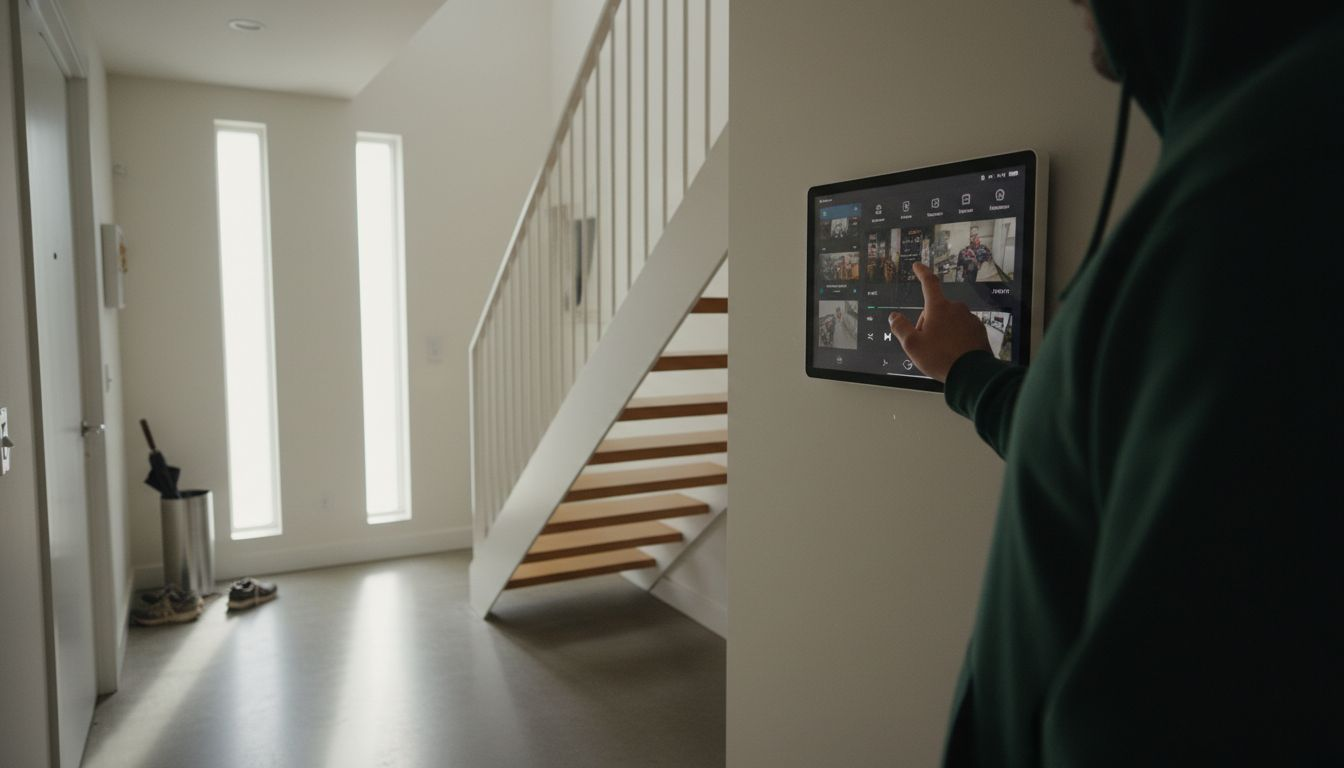
Advanced automation goes beyond simple remote control, creating predictive and adaptive living spaces. Artificial intelligence learns from user behaviors, automatically adjusting settings to match individual preferences. Imagine a home that understands your morning routine, gradually raising window shades, adjusting thermostat temperatures, and curating a personalized morning playlist as you wake up. These systems represent a quantum leap in home technology, transforming living spaces from static environments into dynamic, responsive ecosystems that anticipate and fulfill residents’ needs.
Pro tip: When designing a smart home system, prioritize scalable platforms that support multiple communication protocols to ensure future compatibility and seamless device integration.
Personalization and Lifestyle Enhancements
Modern luxury home entertainment transcends traditional technological solutions by delivering deeply personalized experiences that reflect individual lifestyles and preferences. Luxury consumer technologies now represent sophisticated ecosystems that adapt dynamically to homeowners’ unique behavioral patterns, preferences, and emotional states. These advanced systems go far beyond simple remote controls, instead creating intelligent environments that anticipate needs, curate experiences, and seamlessly integrate with personal rhythms of living.
The true power of personalization lies in its ability to transform technology from a functional tool into an extension of individual identity. Digital interaction platforms enable homes to become responsive canvases that adjust lighting, music, temperature, and visual environments to match specific moods, activities, or times of day. Imagine a home cinema that automatically adjusts acoustic settings based on the genre of film, or a sound system that transitions between energetic morning playlists and relaxing evening compositions without manual intervention.
Advanced personalization represents a convergence of artificial intelligence, machine learning, and intuitive design. These systems continuously learn from user interactions, creating increasingly refined and nuanced experiences over time. The result is a living environment that feels less like a collection of technological devices and more like an intelligent, empathetic companion that understands and supports individual lifestyle preferences. From automated wellness routines to entertainment ecosystems that seem to read your mind, personalized home technologies are redefining the boundaries between human experience and technological innovation.
Pro tip: Invest in modular smart home platforms that offer robust machine learning capabilities, ensuring your personalization systems become more sophisticated and tailored to your lifestyle with continued use.
Risks, Costs, and Comparing Alternatives
Integrated entertainment systems represent significant investments for luxury homeowners, requiring careful evaluation of financial and technological considerations. Luxury entertainment infrastructure demands comprehensive analysis of upfront costs, potential risks, and long-term scalability. Homeowners must navigate complex trade-offs between cutting-edge customization and potential technological obsolescence, balancing sophisticated design aspirations with practical financial constraints.
The financial landscape of high-end home entertainment systems involves multiple cost layers beyond initial equipment purchases. Technology implementation strategies reveal nuanced expense structures including professional design services, custom integration, ongoing maintenance, and periodic system upgrades. Sophisticated systems might range from $50,000 to over $500,000, with annual maintenance costs potentially representing 10-15% of the initial investment. Critical cost considerations include system complexity, required professional expertise, and potential future adaptability.
Risk management becomes paramount when investing in advanced integrated entertainment technologies. Potential vulnerabilities include cybersecurity exposure, system compatibility challenges, and rapid technological evolution that might render expensive installations obsolete within several years. Prudent homeowners should prioritize modular systems offering seamless upgrade paths, robust security protocols, and flexible architectural integrations. This approach mitigates financial risks while preserving the ability to incorporate emerging technologies without complete system replacement.
Here is a summary of risk and cost considerations for integrated entertainment investments:
| Consideration | Description | Long-Term Impact |
|---|---|---|
| Upfront Cost | Includes hardware, design, installation | Influences scalability choices |
| Maintenance Fees | Annual support and technology upkeep | Preserves system performance |
| Upgrade Paths | Ability to add or improve components | Reduces obsolescence risk |
| Cybersecurity | Protects privacy and system integrity | Prevents costly breaches |
Pro tip: Request comprehensive documentation and future upgrade roadmaps from integration specialists before finalizing any high-end entertainment system investment.
Elevate Your Luxury Home With Seamless Integrated Entertainment
Integrated entertainment systems require expert design and flawless execution to overcome challenges like complex technology integration, customization demands, and future-proofing your investment. At Atlanta Home Theater, we understand how critical these elements are. Our team specializes in creating personalized home theater experiences, automated lighting systems, and intelligent smart home controls that turn your luxury residence into a responsive, flawless environment where technology adapts effortlessly to your lifestyle.
Don’t settle for complicated setups that become obsolete or difficult to manage. With over 25 years of experience, our professionals ensure your integrated entertainment system is scalable, secure, and tailored to your unique preferences. Whether you want the immersive cinema environment described in the article or seamless whole-home audio and smart automation, experience the difference of working with experts who prioritize your vision and convenience.
Discover how you can transform your living space today by visiting Atlanta Home Theater. Learn more about our custom solutions designed for luxury homeowners at custom private cinema and explore our advanced smart home integration. Schedule your consultation now to begin crafting your personalized entertainment ecosystem with a team dedicated to excellence.
Frequently Asked Questions
What is integrated entertainment in luxury homes?
Integrated entertainment involves creating immersive technological ecosystems by seamlessly connecting multiple systems like audio, visual, and smart home controls to enhance the overall sensory experience in luxury living spaces.
How can I customize my integrated entertainment system?
You can customize your system by incorporating elements like climate-synchronized lighting, automated scene transitions between entertainment areas, and intelligent audio systems that adjust based on your preferences and activities.
What are the main components of a luxury home entertainment system?
Main components include home theaters, distributed audio systems, smart lighting, and unified control platforms that allow for a cohesive user experience across different entertainment zones.
What are the potential risks and costs associated with integrated entertainment systems?
Risks include cybersecurity vulnerabilities and potential for technology obsolescence, while costs can vary significantly based on system complexity, requiring careful analysis of upfront investments, ongoing maintenance, and upgrade paths.