
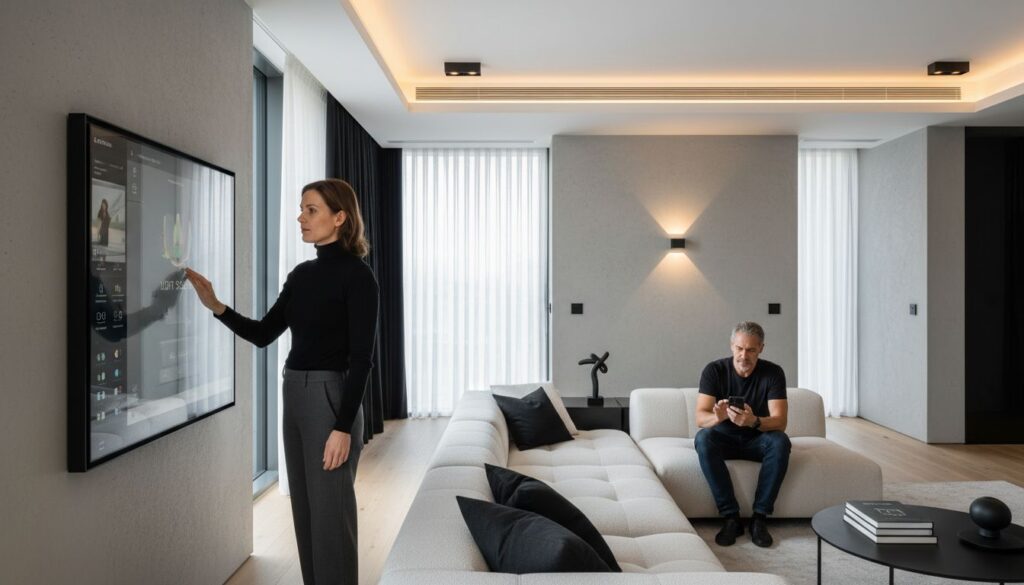
More than 30 percent of energy consumed in homes goes to lighting, yet most of that is wasted through inefficiency and outdated habits. Lighting automation changes this equation by creating systems that respond to your daily routines and needs in real time. Whether you are looking for greater comfort, energy savings, or personalized control, understanding these core concepts will show you how smart technology can modernize your living spaces while lowering costs.
Table of Contents
- Defining Lighting Automation And Core Concepts
- Types Of Lighting Automation Systems Explained
- How Lighting Automation Works In Smart Homes
- Key Benefits For Homeowners And Golfers
- Common Pitfalls And What To Avoid
Key Takeaways
| Point | Details |
|---|---|
| Lighting Automation Benefits | It enhances energy efficiency, security, and convenience by intelligently managing lighting based on various inputs. |
| Types of Systems | Systems range from basic manual controls to advanced sensor-driven networks, addressing various user needs in both residential and commercial settings. |
| Common Mistakes | Homeowners should avoid inadequate planning and choosing non-scalable systems to maximize effectiveness and compatibility. |
| Smart Home Integration | Integration of lighting automation with smart home technologies allows for seamless control and enhanced user experience through mobile apps and voice commands. |
Defining Lighting Automation and Core Concepts
Lighting automation is a sophisticated technology that transforms how we interact with illumination in residential and commercial spaces. According to recent studies, this innovative system integrates sensors, controllers, and intelligent networks to manage lighting environments with unprecedented precision and efficiency.
Lighting automation represents more than just turning lights on and off remotely. At its core, it’s a comprehensive approach to creating intelligent, responsive lighting ecosystems that adapt to human behavior, environmental conditions, and energy conservation goals. Modern systems can dynamically adjust brightness, color temperature, and illumination zones based on real-time inputs like occupancy, natural light levels, and user preferences.
The fundamental components of lighting automation typically include:
- Sensors: Motion, occupancy, and ambient light detectors
- Controllers: Central management units that process sensor data
- Smart Switches: Wireless devices enabling remote and programmed control
- Connectivity Protocols: Wi-Fi, Zigbee, or Z-Wave for network integration
By leveraging these technologies, homeowners can achieve remarkable benefits. Interior and Exterior Lighting + Design solutions offer not just convenience, but significant energy savings, enhanced security, and personalized lighting experiences that adapt seamlessly to daily routines.
Types of Lighting Automation Systems Explained
Lighting automation systems have evolved into sophisticated solutions with multiple control mechanisms designed to enhance user experience and energy efficiency. According to research from Partnerships for Schools, these systems range from basic manual switches to advanced intelligent networks that can automatically adjust illumination based on complex environmental inputs.
Automated lighting systems can be categorized into several distinct types, each offering unique capabilities and benefits for residential and commercial environments. The primary categories include:
- Manual Control Systems
- Basic on/off switches with programmable settings
- Simple remote control interfaces
- Wall-mounted digital control panels
- Time-Based Control Systems
- Scheduled lighting sequences
- Preset time-triggered illumination changes
- Day/night cycle management
- Sensor-Driven Systems
- Motion detection lighting
- Occupancy-based illumination
- Ambient light level adjustments
For homeowners seeking comprehensive lighting solutions, Automated Shades can complement these systems, creating a holistic approach to environmental control.
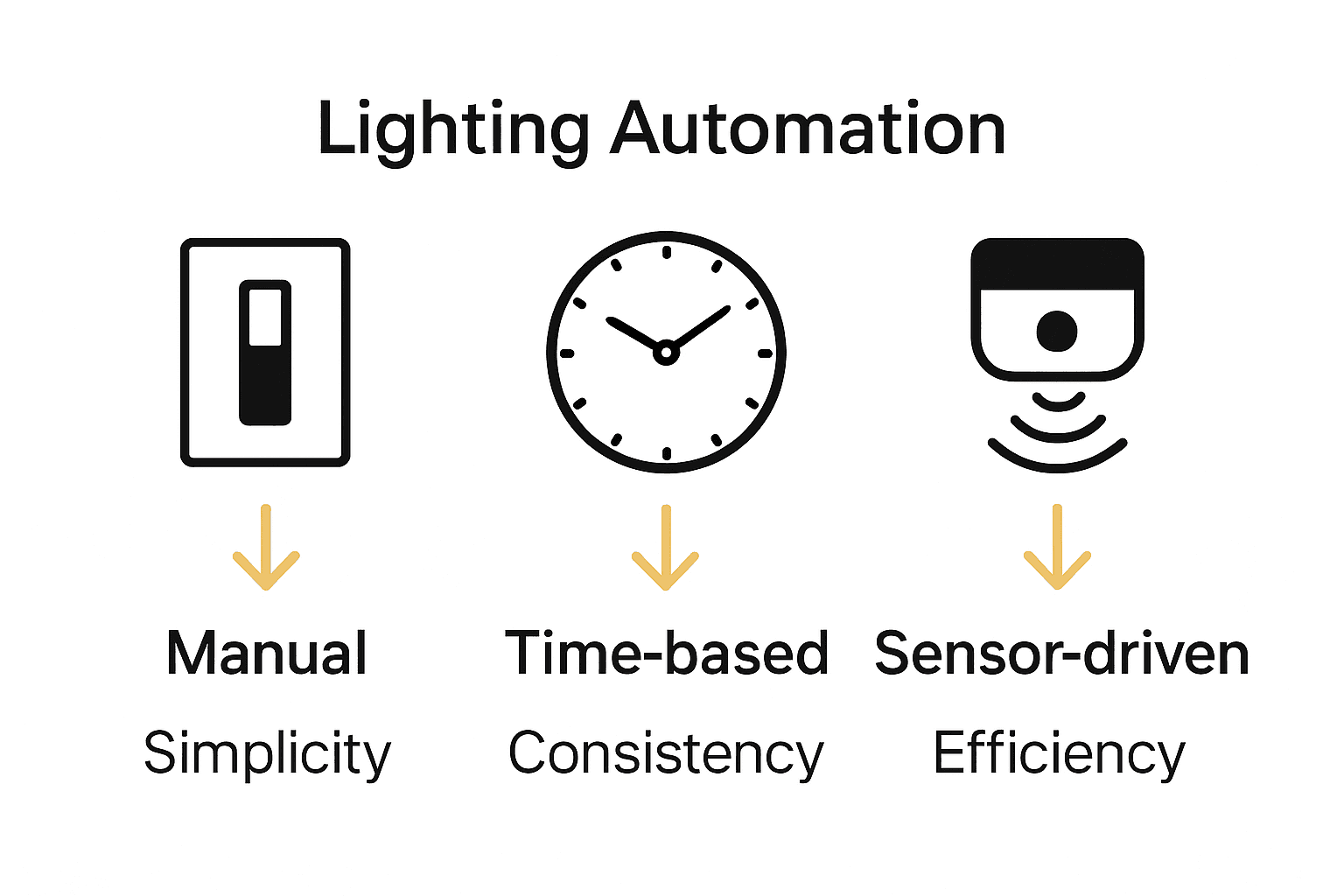 These intelligent networks not only provide convenience but also significantly reduce energy consumption by ensuring lights operate only when and where they are needed.
How Lighting Automation Works in Smart Homes
Lighting automation transforms traditional home illumination into an intelligent, responsive ecosystem that adapts seamlessly to homeowners’ lifestyles and preferences. These sophisticated systems leverage advanced technologies to create dynamic lighting environments that go far beyond simple on/off functionality.
The core mechanism of smart home lighting involves an intricate network of interconnected devices that communicate and respond to various inputs. These systems typically include smart bulbs, sensors, controllers, and mobile applications that work together to create a comprehensive lighting management solution. Homeowners can now program lighting scenes, adjust brightness levels, and control illumination from anywhere using smartphone apps or voice commands.
Key operational components of lighting automation include:
- Sensor Integration
- Motion detection for automatic illumination
- Ambient light level monitoring
- Occupancy tracking for energy efficiency
- Connectivity Protocols
- Wi-Fi enabled devices
- Bluetooth communication
- Zigbee and Z-Wave networks
- Intelligent Programming
- Time-based lighting schedules
- Scene-specific configurations
- Adaptive brightness adjustments
For homeowners seeking a comprehensive approach to environmental control, Natural Light Control in Luxury Homes can complement these lighting systems, creating a holistic smart home experience that maximizes comfort and energy efficiency.
Key Benefits for Homeowners and Golfers
Lighting automation offers a transformative approach to home management, delivering substantial advantages across multiple domains. According to research from ijraset, homeowners can achieve significant energy savings, enhanced security, and unprecedented convenience through intelligent lighting control systems.
Energy efficiency stands out as a primary benefit for both homeowners and golf enthusiasts. Automated lighting systems dramatically reduce electricity consumption by intelligently managing illumination based on occupancy, time of day, and specific activity requirements. For golfers practicing in home simulators, this means precise lighting that can be tailored to create optimal training environments without unnecessary energy waste.
Key benefits include:
- Cost Savings
- Reduced electricity bills
- Longer bulb lifespan
- Minimal energy wastage
- Enhanced Security
- Programmable lighting sequences
- Simulated occupancy during travel
- Deterrence of potential intruders
- Performance Optimization
- Customizable lighting for golf simulators
- Precise illumination control
- Reduced eye strain during practice
For golf enthusiasts looking to create the ultimate home practice environment, Complete Guide to Golf Simulators at Home provides comprehensive insights into maximizing your indoor training setup with intelligent lighting solutions that enhance both performance and comfort.
Common Pitfalls and What to Avoid
Navigating the complex world of lighting automation requires careful consideration and strategic planning. Homeowners must be cautious about relying on basic automated systems that lack dynamic light intensity adjustments and comprehensive energy management capabilities.
Technological limitations represent a significant challenge in lighting automation. Homeowners often make critical mistakes by selecting systems without thoroughly evaluating their specific needs, compatibility, and long-term scalability. Rushing into purchases without understanding the intricate details of connectivity, sensor responsiveness, and integration potential can lead to frustrating and inefficient installations.
Common pitfalls to avoid include:
- Inadequate System Planning
- Overlooking room-specific lighting requirements
- Ignoring future expansion possibilities
- Selecting non-scalable technologies
- Connectivity Challenges
- Incompatible communication protocols
- Weak network infrastructure
- Limited smart home ecosystem integration
- Installation Errors
- Improper sensor placement
- Incorrect wiring configurations
- Neglecting professional consultation
For golfers and homeowners seeking to avoid these common mistakes, Understanding Golf Simulator Room Requirements offers comprehensive insights into creating intelligent, adaptable lighting environments that maximize both functionality and performance.
Discover the Power of Customized Lighting Automation for Your Home
Managing your lighting environment with precision and ease is no longer a challenge you have to face alone. This article highlights the complexities of lighting automation systems from sensor integration to connectivity protocols and points out common missteps like poor planning and limited scalability. If you worry about wasting energy, unclear system controls, or security issues, our expert team at Atlanta Home Theater is ready to help you create an intelligent lighting ecosystem tailored precisely to your needs.
Experience unmatched convenience, energy efficiency, and enhanced security with our professional solutions in automated lighting systems. Whether you want to optimize your home theater ambiance, improve your golf simulator lighting, or add smart outdoor illumination, we customize every detail for you. Don’t wait to transform your home environment – schedule your personal consultation now through Atlanta Home Theater and let us guide you step by step to intelligent lighting perfection.
Frequently Asked Questions
What is lighting automation?
Lighting automation is a technology that integrates sensors, controllers, and networks to manage lighting in residential and commercial spaces. It allows for intelligent lighting systems that adapt to human behavior and environmental conditions.
How does lighting automation work in smart homes?
Lighting automation in smart homes involves an interconnected network of devices, such as smart bulbs and sensors, that communicate with each other to adjust lighting based on user preferences, time of day, and occupancy.
What are the key benefits of lighting automation for homeowners?
Key benefits include significant energy savings, enhanced security features like programmable sequences, and convenience through remote control and automated lighting adjustments based on usage.
What types of lighting automation systems are commonly available?
Common types of lighting automation systems include manual control systems, time-based control systems, and sensor-driven systems that help manage illumination based on occupancy and environmental conditions.
Recommended