
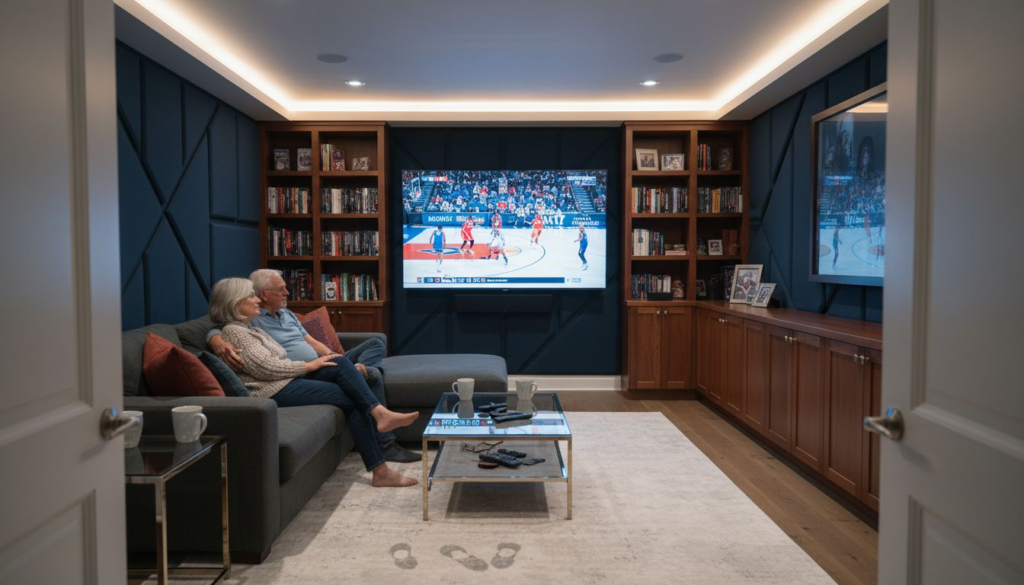
For many homeowners, the quest for ultimate home entertainment leads to more than just a big screen TV. Media rooms have become the heart of luxury living, blending immersive technology and breathtaking design for an experience far beyond a standard living room. Today’s most innovative spaces deliver customized cinema environments with smart automation, setting a new standard in home theater sophistication and comfort.
Table of Contents
- Defining Media Rooms in Luxury Homes
- Types of Media Room Experiences
- Essential Features and Latest Tech
- Smart Home Integration and Automation
- Design Trends and Functional Flexibility
- Common Pitfalls and How to Avoid Them
Key Takeaways
| Point | Details |
|---|---|
| Integration of Technology | Luxury media rooms utilize advanced smart home automation for seamless control of audiovisual elements, enhancing the user experience. |
| Design Flexibility | Modular furniture and adaptable technology allow media rooms to transition between different entertainment functions, meeting diverse homeowner needs. |
| Acoustic Optimization | Professional acoustic consultation is essential to achieve superior sound quality, ensuring an immersive cinematic experience. |
| Future-Proofing | Implementing a flexible infrastructure enables easy upgrades and integration of emerging technologies, safeguarding your investment. |
Defining Media Rooms in Luxury Homes
Media rooms represent sophisticated entertainment spaces that transform residential experiences by integrating cutting-edge technology and design excellence. These specialized zones go far beyond traditional living areas, creating immersive media consumption environments that reflect the pinnacle of luxury home design.
At their core, media rooms are dedicated spaces engineered to deliver exceptional audiovisual experiences. They are meticulously designed to replicate professional cinema environments while maintaining the comfort and personalization of a private residence. Unlike standard television rooms, these areas incorporate professional-grade sound systems, high-resolution projection technologies, acoustic treatments, and custom seating arrangements that prioritize both technological performance and aesthetic elegance.
Luxury media rooms distinguish themselves through several key characteristics. They typically feature advanced acoustic engineering to eliminate external noise and optimize sound quality. Integrated smart home technologies allow seamless control of lighting, sound, and visual systems through sophisticated automation. Custom design elements like motorized screens, hidden speaker systems, and climate-controlled environments ensure that these spaces represent the ultimate intersection of technology and interior design.
Pro tip: When designing a media room, prioritize professional acoustic consultation to achieve cinema-quality sound performance that transforms your entertainment experience.
Here’s a quick look at how luxury media rooms compare to traditional home theaters:
| Aspect | Luxury Media Room | Traditional Home Theater |
|---|---|---|
| Technology Integration | Full smart home automation | Basic remote controls |
| Flexibility | Multipurpose and adaptable | Primarily for movies |
| Design Approach | Custom, bespoke elements | Standardized layouts |
| Seating | Modular, tailored options | Fixed theater seating |
Types of Media Room Experiences
Luxury media rooms represent a sophisticated spectrum of entertainment possibilities, ranging from traditional to immersive experiences. These spaces are designed to transcend conventional viewing environments, offering homeowners multiple ways to engage with digital content through advanced technological integration.
Traditional cinematic experiences form the foundation of media room design, featuring high-definition projection systems, professional-grade sound equipment, and custom seating that mimics premium theater environments. Advanced iterations include immersive viewing zones with multi-screen configurations, allowing simultaneous content consumption or expansive panoramic visual experiences. Some luxury media rooms incorporate motorized screens that can transform from flat displays to curved projection surfaces, creating adaptable entertainment landscapes.
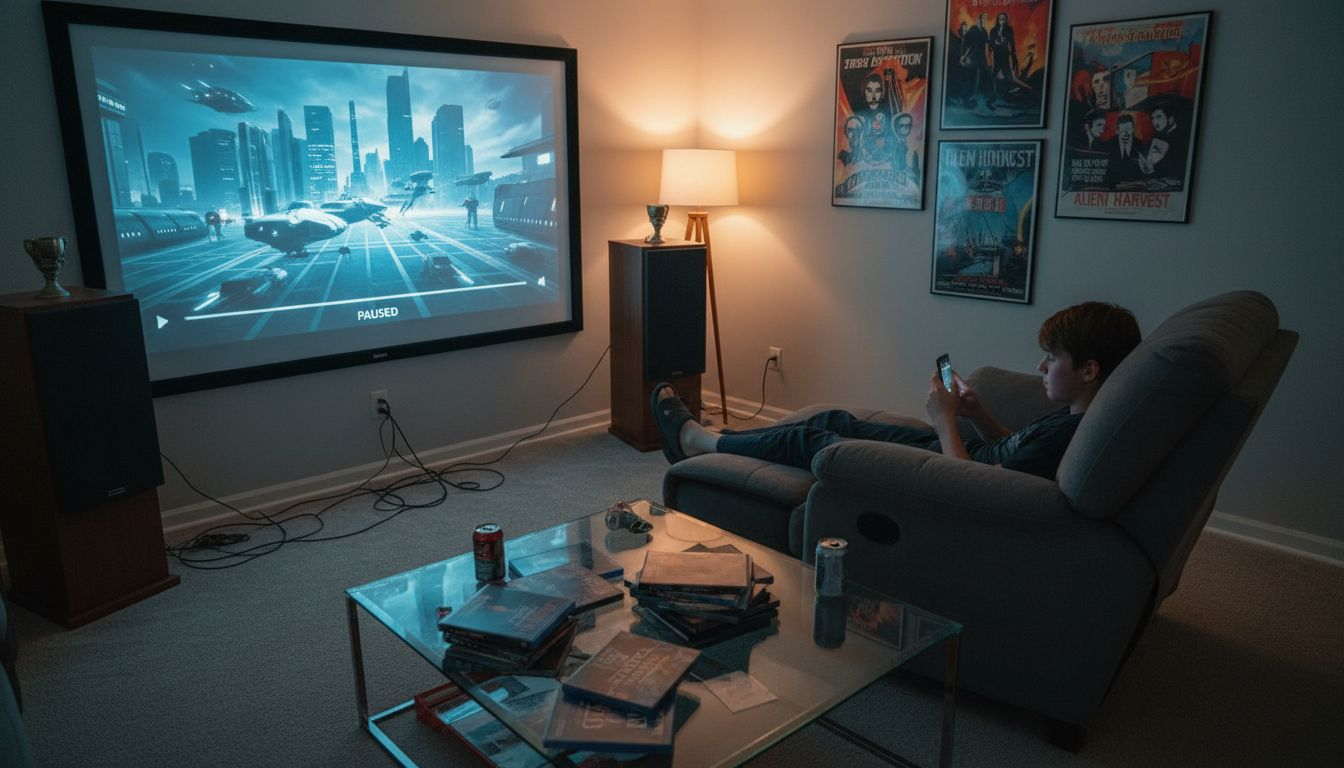
Beyond visual entertainment, modern media rooms explore interactive time-based media technologies that blend virtual reality, augmented reality, and interactive gaming platforms. These cutting-edge spaces enable users to transition seamlessly between passive viewing and active engagement. Specialized configurations might include professional-grade gaming setups, virtual travel experiences, interactive fitness interfaces, or collaborative multimedia workspaces that adapt to changing entertainment and professional needs.
Pro tip: When designing a multi-purpose media room, invest in flexible mounting systems and modular technology infrastructure to maximize adaptability across different entertainment experiences.
Essential Features and Latest Tech
Luxury media rooms today represent the pinnacle of technological sophistication, integrating advanced audio-visual systems that transform entertainment experiences. These spaces go far beyond traditional home entertainment setups, incorporating cutting-edge technologies that create immersive, personalized environments tailored to individual preferences.
The core of modern media room technology centers on high-performance visual and audio systems. Advanced home cinema technologies now include ultra-high-definition 4K and 8K projectors, acoustically transparent screens, and precision sound systems like Dolby Atmos that create three-dimensional audio landscapes. Acoustic engineering plays a critical role, with specialized wall treatments, sound-absorbing materials, and calibration technologies ensuring optimal sound quality that rivals professional cinema environments.
Smart home integration represents another crucial dimension of contemporary media room design. Automated lighting systems can dynamically adjust based on content, creating immersive viewing experiences. Intelligent control systems allow seamless management of audio, video, climate, and even motorized seating through intuitive interfaces. Advanced streaming capabilities, AI-powered content recommendations, and multi-device synchronization further enhance the technological sophistication of these spaces, transforming media rooms into intelligent, adaptive entertainment zones.
Pro tip: Invest in professional acoustic calibration and a flexible control system to maximize the technological potential of your media room.
Smart Home Integration and Automation
Luxury media rooms are evolving into intelligent ecosystems, seamlessly integrating advanced automation technologies that transform how homeowners interact with their entertainment spaces. These sophisticated systems move beyond simple remote control, creating dynamic environments that anticipate and respond to user preferences with unprecedented precision.
The core of modern smart home integration in media rooms revolves around centralized control systems that connect multiple devices and technologies. Internet-connected smart home platforms enable comprehensive management of audio, video, lighting, temperature, and security through intuitive interfaces. Voice assistants and smartphone applications allow users to create custom scenes, schedule automated routines, and control every aspect of their media room experience with simple voice commands or touch-screen interactions.
Advanced AI and machine learning technologies are revolutionizing media room automation by creating predictive and adaptive environments. These intelligent systems can learn individual preferences, automatically adjusting lighting intensity, sound levels, and visual settings based on the type of content being viewed or the time of day. Integrated sensors and smart algorithms enable nuanced environmental control, from acoustic optimization during movie playback to energy-efficient mode transitions when the room is not in use.
Pro tip: Select a smart home integration platform that offers scalability and cross-device compatibility to future-proof your media room technology.
Design Trends and Functional Flexibility
Luxury media rooms are redefining spatial design through innovative and adaptable architectural approaches that prioritize versatility and personalized experiences. These sophisticated spaces transcend traditional entertainment rooms, offering dynamic environments that seamlessly transform to meet changing lifestyle requirements and technological advancements.
Modern design trends emphasize modular configurations that enable rapid spatial reconfiguration. Structural flexibility allows homeowners to convert media rooms from intimate screening environments to expansive social gathering spaces within minutes. Innovative design elements include movable acoustic panels, retractable projection screens, and convertible furniture that can shift between entertainment and professional collaboration modes, ensuring maximum utility and aesthetic appeal.
Technology plays a crucial role in supporting functional flexibility, with integrated systems that enable seamless transitions between different usage scenarios. Advanced motorized furniture, hidden storage solutions, and programmable environmental controls allow media rooms to adapt instantaneously. Designers are increasingly incorporating multi-purpose furniture with embedded charging stations, acoustic treatments that can be adjusted remotely, and intelligent lighting systems that create different ambiances with minimal manual intervention.
Pro tip: Invest in modular furniture and adaptable technology infrastructure to create a media room that can effortlessly transform between different entertainment and functional modes.
Common Pitfalls and How to Avoid Them
Luxury media rooms represent significant investments, and understanding potential challenges is crucial for creating truly exceptional spaces. Media room design requires careful accessibility considerations that go beyond aesthetic and technological sophistication, ensuring inclusive and user-friendly environments for all potential users.
Technological integration presents one of the most complex challenges in media room design. Inconsistent system interoperability can undermine the entire user experience, creating frustrating and disjointed interactions. Homeowners frequently encounter issues with incompatible devices, poor network infrastructure, and inadequate professional installation. These challenges can result in systems that fail to communicate effectively, leading to reduced functionality and diminished user satisfaction.
Another critical pitfall involves overlooking long-term maintenance and scalability. Media room technologies evolve rapidly, and design choices that seem cutting-edge today can quickly become obsolete. Successful implementations require flexible infrastructure that supports easy upgrades, modular component replacement, and seamless integration of emerging technologies. This approach demands thoughtful planning, professional consultation, and a forward-thinking design philosophy that anticipates technological shifts and changing entertainment paradigms.
Below is a summary of common pitfalls in media room design and strategies to address them:
| Challenge | Why It’s a Problem | How to Address |
|---|---|---|
| Device Incompatibility | Causes system failures and frustration | Choose interoperable platforms |
| Obsolescence | Rapid tech changes reduce value | Plan for modular upgrades |
| Poor Acoustics | Diminishes immersive experience | Hire acoustic specialists |
| Complex Controls | Intimidates non-technical users | Use intuitive automation systems |
Pro tip: Consult with professional integrators who specialize in whole-home technology to design a media room with robust, future-proof infrastructure.
Elevate Your Luxury Living with a Custom Media Room
Creating a truly immersive media room that balances cutting-edge technology and elegant design can be challenging. This article highlights key hurdles such as achieving perfect acoustics, seamless smart home integration, and anticipating rapid tech changes. At Atlanta Home Theater, we understand these complexities and specialize in delivering tailored solutions that elevate your luxury living spaces. Our expert team designs media rooms that feature professional-grade sound systems, intuitive automation, and modular setups that adapt to your evolving entertainment needs.
Discover how our dedication to precision and innovation can help you avoid common pitfalls in media room design. Explore expert tips in our Sound Advice Archives – Atlanta Home Theater and experience how our custom private cinema and smart home integration can transform your lifestyle. Don’t wait to elevate your home entertainment. Visit Atlanta Home Theater today and schedule your consultation to begin crafting a media room experience that is as sophisticated and flexible as you desire.
Frequently Asked Questions
What is a luxury media room?
A luxury media room is a specialized entertainment space designed to provide an exceptional audiovisual experience, featuring advanced technology and bespoke design elements that resemble a professional cinema environment.
How do luxury media rooms differ from traditional home theaters?
Luxury media rooms offer full smart home automation, flexible design, custom seating, and multipurpose functionality, unlike traditional home theaters that typically have standardized layouts and basic remote controls.
What are the essential features of a modern luxury media room?
Modern luxury media rooms include high-performance audio and visual systems, smart home integration, advanced acoustic engineering, and customizable design elements to enhance the overall entertainment experience.
How can I ensure my media room has optimal sound quality?
To achieve optimal sound quality in your media room, it’s recommended to engage a professional acoustic consultant who can provide specific treatments, materials, and calibration for your space.