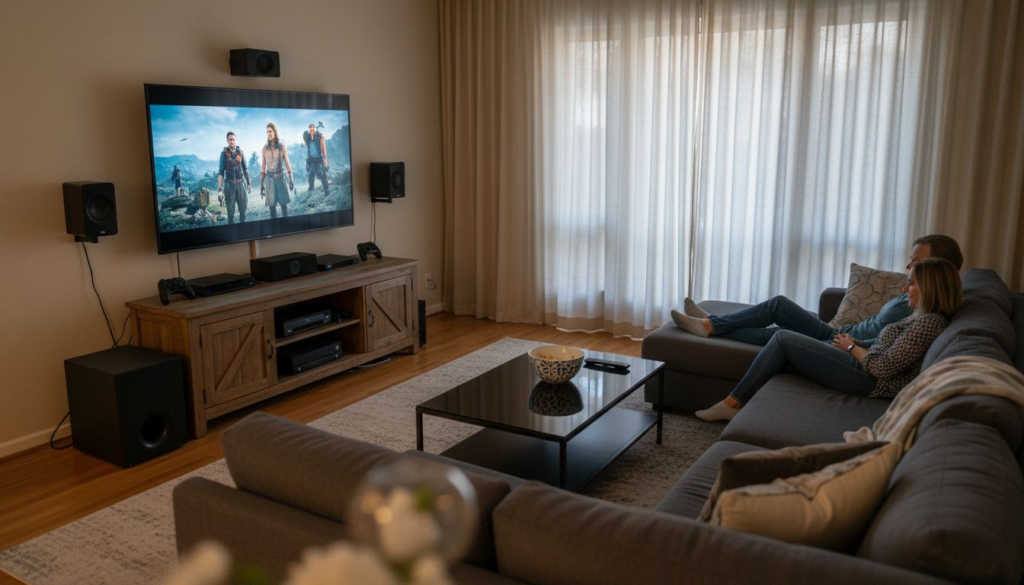
Transforming a home theater into a personal cinema is no longer just about bigger screens or louder speakers. For discerning Atlanta homeowners, the real difference lies in embracing
three-dimensional audio landscapes that surpass traditional surround sound. This advanced approach immerses you in lifelike sound, where each moment is mapped with astonishing accuracy to your space and expectations. Discover how immersive audio systems can truly redefine both the comfort and sophistication of your custom entertainment experience.
Table of Contents
Key Takeaways
| Point |
Details |
| Immersive Audio Enhances Experiences |
Immersive audio transforms sound by creating three-dimensional soundscapes, providing listeners with an unparalleled auditory experience. |
| Misconceptions about Immersive Audio |
Common myths suggest that more speakers equal better sound and that immersive audio is only for professionals, which misrepresents its accessibility. |
| Major Audio Formats |
Key immersive audio formats include Dolby Atmos and DTS:X, each offering unique capabilities suited for various audio applications. |
| Cost Considerations for Upgrades |
Upgrading to immersive audio systems involves various cost tiers, and allocating funds for professional calibration enhances overall performance. |
Defining Immersive Audio and Common Myths
Immersive audio represents a revolutionary approach to sound that transforms traditional home theater experiences by creating multi-dimensional soundscapes far beyond conventional stereo or surround sound systems.
Immersive audio technologies extend our auditory perception, merging physical and virtual sound environments to deliver unprecedented sensory engagement.
Unlike traditional audio setups, immersive sound isn’t simply about increasing volume or adding more speakers. Instead, it focuses on precise spatial positioning and realistic sound reproduction that mimics how humans naturally perceive audio in three-dimensional space. This technology creates an almost tangible audio experience where sounds seem to emerge from specific locations around the listener, creating a sense of being inside the audio environment rather than merely hearing it.
Common myths about immersive audio often misrepresent its complexity and potential. Here are some key misconceptions:
- Myth 1: More speakers automatically mean better immersive sound
- Myth 2: Immersive audio is only for professional recording studios
- Myth 3: The technology is prohibitively expensive for home installations
- Myth 4: Immersive sound works identically in every room configuration
In reality, true immersive audio requires carefully calibrated speaker placement, advanced signal processing, and an understanding of acoustic principles. The goal isn’t simply to reproduce sound, but to create a
three-dimensional audio landscape that adapts to specific room characteristics and listener positioning.
Pro tip: When designing an immersive audio system, consider room acoustics, speaker placement, and sound reflection points as critical factors in achieving an authentic spatial audio experience.
Immersive audio formats represent cutting-edge technologies that dramatically transform sound reproduction, moving far beyond traditional stereo and surround sound configurations.
Advanced audio preservation methods have enabled the development of sophisticated sound formats that create incredibly realistic three-dimensional listening experiences.
The primary immersive audio formats currently dominating home theater systems include:
- Dolby Atmos: Object-based audio technology that allows sound engineers to place and move audio elements precisely in a three-dimensional space
- DTS:X: Flexible format that adapts to different speaker configurations and room layouts
- Auro-3D: Vertical sound layering technique that adds height channels for enhanced spatial perception
- Sony 360 Reality Audio: Designed specifically for music reproduction with immersive sound positioning
Each of these formats uses unique approaches to create
multi-dimensional sound experiences. Dolby Atmos, for instance, can support up to 128 simultaneous audio objects, allowing sound designers to create incredibly precise audio landscapes where sounds seem to move dynamically around and above the listener.
Here’s a comparison of leading immersive audio formats to help you select the best fit:
| Format |
Key Technology |
Best Use Case |
| Dolby Atmos |
Object-based audio, overhead speakers |
Cinematic movies, action films |
| DTS:X |
Flexible sound placement, adaptable layouts |
Home theaters with custom setups |
| Auro-3D |
Height channel layering |
Music, concert experiences |
| Sony 360 Reality Audio |
Immersive music spatialization |
Headphone-based personal listening |
The technical complexity of these formats goes beyond simply adding more speakers.
Wave audio file technologies support high-resolution, multi-channel audio that captures intricate sound details, enabling more authentic and immersive listening experiences that adapt to specific room acoustics and listener positioning.
Pro tip: When selecting an immersive audio format, consider your room’s acoustic characteristics, speaker placement capabilities, and the type of content you most frequently enjoy.
How Immersive Audio Technology Works
Immersive audio technology represents a sophisticated approach to sound reproduction that goes far beyond traditional audio systems. By leveraging advanced hardware and complex software algorithms, this technology creates a three-dimensional sound environment that mimics real-world acoustic experiences.
The core mechanisms of immersive audio technology involve several key components:
- Spatial Microphones: Capture sound from multiple directional perspectives
- Object-Based Audio Rendering: Allows individual sound elements to be positioned dynamically
- Metadata Encoding: Provides precise spatial information for sound placement
- Adaptive Signal Processing: Adjusts audio output based on speaker configuration
At its core, immersive audio works through
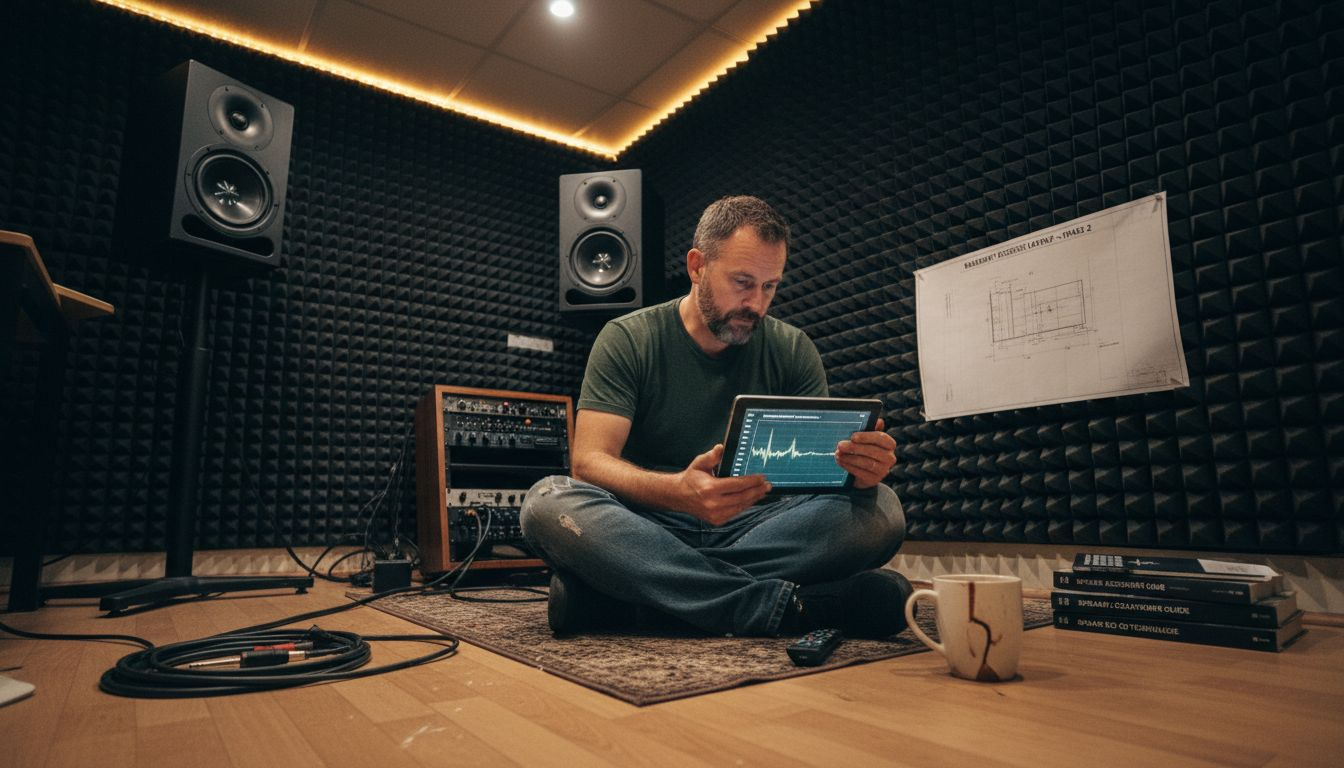
advanced sound mapping techniques. Sound engineers use specialized software to assign specific spatial coordinates to audio objects, enabling sounds to move precisely around and above listeners. This approach creates an incredibly realistic audio landscape where sounds can appear to originate from specific locations, creating a sense of depth and movement.
 Spatial audio rendering techniques
 enable the technology to dynamically adapt to different listening environments. Whether using multichannel speakers or advanced headphone technologies, these systems can model room acoustics, account for listener positioning, and create personalized audio experiences that feel incredibly natural and immersive.
Pro tip: Invest in a professional audio calibration system that can map your specific room’s acoustic characteristics to maximize the performance of your immersive audio setup.
Home Theater Applications and Experiences
Home theater immersive audio technologies transform entertainment experiences by creating incredibly realistic soundscapes that transport listeners directly into the heart of movies, music, and gaming environments. Unlike traditional audio systems, immersive sound reproduces audio with astonishing precision, making viewers feel like they are actually inside the scene.
The most compelling home theater applications of immersive audio include:
- Movie Watching: Precise sound placement that matches on-screen action
- Music Concerts: Replicating live performance spatial dynamics
- Gaming: Creating hyper-realistic environmental sound landscapes
- Sports Broadcasting: Simulating stadium and arena acoustics
- Documentary Experiences: Enhancing narrative storytelling through spatial audio
These applications leverage
multi-dimensional sound technologies that go far beyond traditional stereo or surround sound. Sound elements can now move independently around listeners, creating an almost three-dimensional audio environment where individual sounds seem to originate from specific locations, adding unprecedented depth and realism to home entertainment experiences.
Modern home theater setups increasingly integrate advanced
spatial audio rendering systems that adapt to specific room configurations. These systems use sophisticated calibration techniques to map sound precisely, ensuring that regardless of room size or speaker placement, listeners experience consistently immersive audio performances.
Pro tip: When designing your home theater, prioritize speaker placement and room acoustics over raw equipment cost to maximize your immersive audio experience.
Comparing Costs, Upgrades, and Integration
Home equipment upgrade costs represent a strategic investment in immersive audio technology, balancing initial expenses against long-term entertainment value. While advanced immersive audio systems may require substantial upfront investment, they deliver transformative experiences that dramatically enhance home entertainment capabilities.
The financial considerations for immersive audio upgrades typically involve several key components:
- Entry-Level Systems: $500 – $2,000 range
- Mid-Tier Professional Systems: $2,000 – $5,000 range
- High-End Custom Installations: $5,000 – $25,000+
- Whole-Home Integration Packages: $10,000 – $50,000
Beyond raw equipment costs, homeowners should consider additional financial strategies for managing immersive audio investments.
Home technology upgrade incentives can significantly offset initial expenses through tax credits, rebates, and energy-efficiency programs that make advanced audio systems more financially accessible.
Below is a summary of estimated costs for immersive audio systems at different investment tiers:
| System Tier |
Typical Cost Range |
Main Features |
| Entry-Level |
$500 – $2,000 |
Basic surround, limited calibration |
| Mid-Tier |
$2,000 – $5,000 |
Improved speakers, auto-calibration |
| High-End Custom |
$5,000 – $25,000+ |
Advanced sound mapping, pro setup |
| Whole-Home Integration |
$10,000 – $50,000 |
Multi-room, full automation |
Successful integration requires careful planning beyond monetary considerations.
Compatibility and scalability are crucial factors, ensuring that new audio systems can seamlessly connect with existing home entertainment infrastructure and potentially expand in future upgrades. Professional consultation can help design systems that grow with technological advancements and homeowner preferences.
Pro tip: Allocate approximately 20-25% of your total home theater budget for professional calibration and integration to maximize your immersive audio system’s performance and longevity.
Elevate Your Home Theater with Expert Immersive Audio Solutions
Immersive audio transforms your home theater by creating a three-dimensional sound environment where every whisper, footstep, and explosion feels real. If you’ve ever struggled with poor speaker placement or wondered how to make your sound system adapt perfectly to your room, you are not alone. Atlanta Home Theater understands how critical it is to combine precise spatial audio technology with professional calibration to achieve a truly enveloping sound experience that matches what the article describes as “multi-dimensional soundscapes” and “advanced sound mapping techniques.”
Our team of over 40 specialists has been delivering customized home theater systems since 1996. We focus on key factors like room acoustics, strategic speaker placement, and adaptive audio technology to bring cinematic Dolby Atmos and other immersive formats to life in your own home. For insights on everything from sound calibration to the latest audio innovations, explore our
Sound Advice Archives – Atlanta Home Theater. Ready to break free from conventional audio setup myths and experience authentic immersive sound? Visit
Atlanta Home Theater today and schedule your personalized consultation. Let us guide you every step of the way toward a flawless immersive audio experience that transforms your entertainment space.
Frequently Asked Questions
What is immersive audio?
Immersive audio is a revolutionary sound approach that creates multi-dimensional soundscapes, moving beyond traditional stereo or surround sound systems to provide a spatial audio experience.
How does immersive audio technology work?
Immersive audio technology utilizes spatial microphones, object-based audio rendering, metadata encoding, and adaptive signal processing to create a three-dimensional sound environment that enhances auditory experiences.
What are the main immersive audio formats available for home theaters?
The primary immersive audio formats include Dolby Atmos, DTS:X, Auro-3D, and Sony 360 Reality Audio, each offering unique approaches to sound reproduction and spatial dynamics.
What should I consider when designing an immersive audio system for my home theater?
Key considerations include room acoustics, speaker placement, and sound reflection points, as these factors significantly influence the authenticity and effectiveness of the immersive audio experience.
Recommended