
Most homeowners investing in indoor entertainment want more than basic screens and putting mats. As advanced golf simulators surge in popularity, Atlanta residents are finding new ways to replicate world-famous courses from the comfort of their homes. Simulator technology now allows millions of Americans to play Pebble Beach or Augusta National without stepping outside. This guide reveals how the latest systems deliver authentic visuals, precise data capture, and immersive environments for a true indoor golf experience.
Table of Contents
- Golf Simulators And Course Replication Basics
- Technologies Used To Mimic Real Courses
- Understanding Simulator Data Capture Systems
- Visual And Sensory Immersion For Players
- Limitations Compared To Real Course Play
- Key Factors In Choosing A Golf Simulator
Key Takeaways
| Point | Details |
|---|---|
| Simulator Technology Enhancements | Golf simulators use advanced sensors and graphics to create immersive experiences, allowing players to practice on famous courses from home. |
| Data Capture Systems | High-speed cameras and algorithms enable precise tracking of shot parameters, providing detailed performance analysis for improvement. |
| Sensory Immersion | Modern simulators incorporate audio and haptic feedback to recreate the sensory aspects of outdoor play, enhancing overall realism. |
| Evaluating Simulators | When selecting a simulator, prioritize accuracy in tracking, visual quality, and the variety of courses available for a comprehensive experience. |
Golf simulators and course replication basics
Golf simulators represent a remarkable technological breakthrough that transforms indoor spaces into immersive golfing environments. Simulator technology enables millions of Americans to experience playing realistic versions of bucket-list courses like Pebble Beach without leaving their homes. These advanced systems combine sophisticated sensors, high-resolution screens, and precision tracking to recreate authentic golf experiences with stunning accuracy.
The core technology behind golf simulators involves sophisticated computer graphics and sensor systems that capture every nuanced detail of a player’s swing.
Infrared tracking, high-speed cameras, and advanced motion sensors work together to analyze ball trajectory, spin, speed, and launch angle with incredible precision. Indoor golf systems reproduce golf course environments graphically, enabling practice and play regardless of external weather conditions, which makes them an attractive option for serious golfers and casual enthusiasts alike.
Modern golf simulators offer remarkable features that go far beyond simple entertainment.
Players can access incredibly detailed digital representations of famous courses worldwide, complete with accurate topographical data, wind conditions, and terrain variations. These systems provide instant performance feedback, helping golfers analyze and improve their techniques through detailed metrics like club head speed, ball spin, and shot accuracy. Some advanced simulators even integrate machine learning algorithms to provide personalized training recommendations based on individual performance patterns.
Pro Tip: When selecting a golf simulator, prioritize systems with multiple camera tracking and high refresh rates to ensure the most realistic and responsive virtual golfing experience.
Technologies used to mimic real courses
Golf simulator technologies have evolved dramatically, employing a sophisticated array of hardware and software components to recreate stunningly realistic golf environments. Advanced simulation systems leverage high-speed cameras, radar sensors, and sophisticated software to digitize real-world courses with photorealistic graphics, transforming indoor spaces into immersive golfing experiences that rival actual course play.
The core technological infrastructure of modern golf simulators involves multiple precision tracking systems. Infrared sensors capture minute details of a player’s swing, while situational cameras analyze ball trajectory and launch dynamics with incredible accuracy. Real-time analysis and display technology creates virtual golf environments that incorporate interactive features and realistic graphics, allowing players to experience everything from wind resistance to terrain variations with remarkable fidelity.
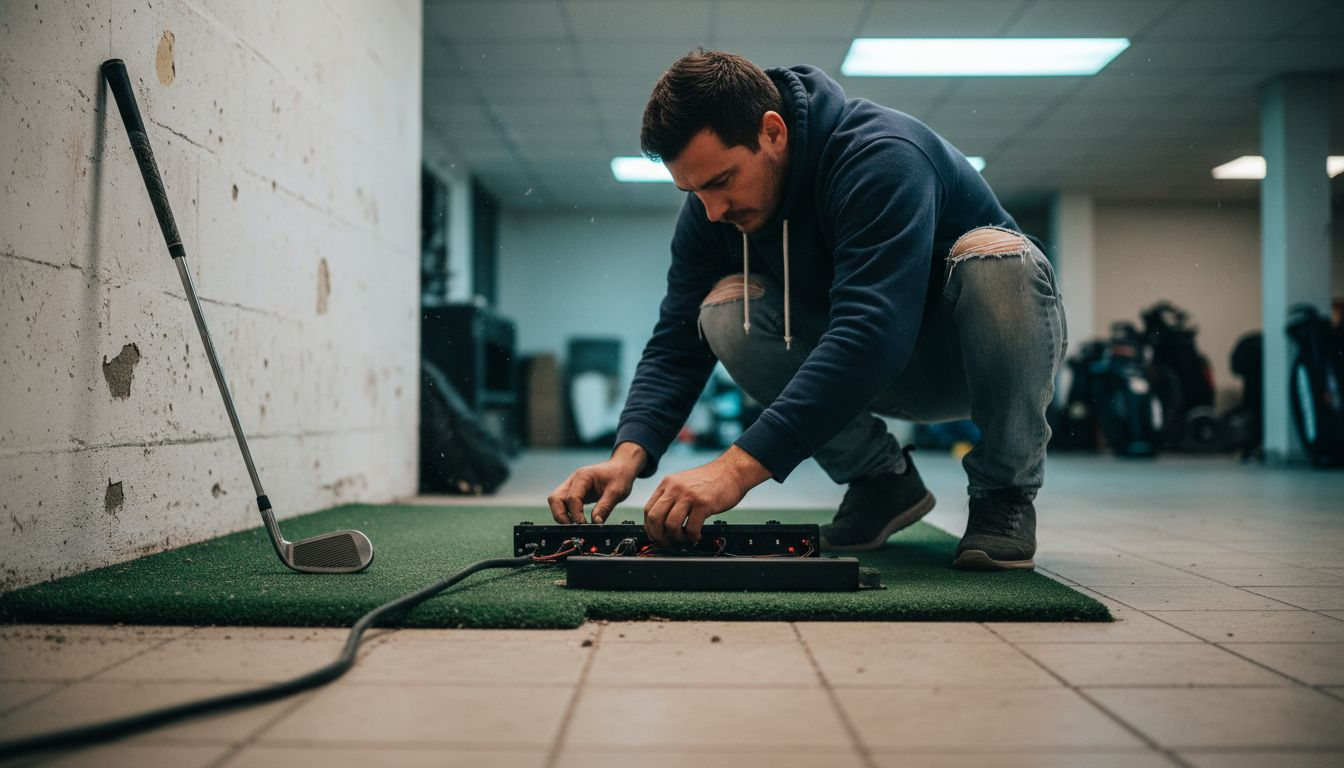
Cutting-edge golf simulator technologies now integrate artificial intelligence and machine learning algorithms to enhance replication accuracy. These systems can dynamically adjust course conditions, simulate different weather patterns, and provide instantaneous performance feedback. Advanced 3D rendering techniques allow for precise topographical mapping, ensuring that digital course representations capture subtle elevation changes, green slopes, and environmental nuances that make each golf course unique.
Pro Tip: When evaluating golf simulator technologies, look for systems with multiple sensor types and high-resolution graphics processing to ensure the most authentic and immersive virtual golfing experience.
Understanding simulator data capture systems
Golf simulator data capture represents a sophisticated technological ecosystem that transforms raw physical movements into precise digital insights. Modern golf simulators rely on advanced tracking systems including dynamic tracking, high-speed cameras, radar, and computer vision to analyze shots in real time, measuring critical parameters that reveal the intricate mechanics of each swing and shot.
The sensor infrastructure in these systems captures an extraordinary range of data points with remarkable precision.
High-speed cameras track ball trajectory, infrared sensors measure club head speed, and sophisticated algorithms calculate launch angles, spin rates, and potential shot outcomes. These granular measurements go beyond simple shot tracking, providing players with comprehensive biomechanical feedback that can help refine technique and understand their individual playing characteristics.
Emerging golf technologies integrate multiple forms of data capture and analytics to deliver comprehensive skill assessment, transforming simulator experiences from simple entertainment into powerful training platforms. Advanced systems now incorporate machine learning algorithms that can predict shot outcomes, simulate complex environmental conditions, and provide personalized coaching recommendations based on an individual golfer’s unique performance metrics. This intelligent approach turns data capture from a passive recording process into an active performance improvement tool.
Pro Tip: When evaluating golf simulator data systems, focus on the number and types of sensors, the refresh rate of tracking technology, and the comprehensiveness of the performance analytics provided.
Here is a comparison of main simulator sensor technologies and their unique benefits:
| Sensor Type | Key Advantage | Typical Use Case |
|---|---|---|
| High-Speed Cameras | Captures ball and club motion with detail | Precision shot analysis |
| Infrared Sensors | Measures club speed and swing path | Swing improvement feedback |
| Radar Systems | Tracks ball launch and distance | Ball flight and trajectory tracking |
| Machine Learning Algorithms | Creates personalized practice plans | Adaptive coaching and skill analysis |
Visual and sensory immersion for players
Golf simulators are transforming indoor experiences by creating incredibly immersive digital environments that replicate the nuanced sensory landscape of real golf courses. High-resolution projection systems, precisely calibrated sound design, and advanced graphical rendering combine to produce stunningly realistic visual landscapes that transport players from their indoor spaces to world-famous golf destinations.
The sensory infrastructure of modern golf simulators goes far beyond simple visual representation. Sophisticated audio systems capture ambient course sounds like rustling grass, distant bird calls, and the subtle acoustics of different terrain types. Advanced projection technologies create depth perception through multi-layered visual rendering, allowing players to perceive subtle terrain variations, wind conditions, and environmental details that make each virtual course feel authentically unique.
Immersion in extended reality technologies relies on creating sensory-rich and interactive environments that facilitate deep player absorption, transforming golf simulators from mere entertainment into profound experiential platforms. The most advanced systems now integrate haptic feedback technologies that simulate ground resistance, club impact sensations, and even atmospheric conditions, creating a multi-sensory experience that engages players on physical, visual, and auditory levels.
Pro Tip: When selecting a golf simulator, prioritize systems with wide-angle projection screens, multi-channel sound systems, and advanced haptic feedback to maximize sensory immersion and realism.
Limitations compared to real course play
Golf simulators, despite their impressive technological advancements, cannot fully replicate the complete sensory and experiential dimensions of playing on a real golf course. The indoor environment inherently constrains the natural variability and unpredictability that define authentic outdoor golfing experiences, creating a controlled but ultimately limited representation of the sport.
The fundamental constraints of simulator technology become most apparent in areas that cannot be easily digitized.
Natural terrain variations, wind dynamics, subtle ground undulations, and the psychological dimensions of outdoor play remain challenging to simulate perfectly. While high-end systems can approximate environmental conditions, they cannot reproduce the spontaneous interactions with actual landscapes – the feel of different grass types, the subtle resistance of natural terrain, or the psychological pressure of real-world course challenges.
Indoor golf environments provide technical and visual replication but are inherently limited by their structured setting and simplified physical sensations. Most simulators struggle to capture the full range of sensory inputs that make outdoor golf a holistic experience.
The randomness of natural conditions, the tactile feedback of real ground surfaces, and the atmospheric nuances of playing outdoors remain difficult to authentically reproduce in an indoor environment. Notably, survey data indicates that only 2% of simulator users reduce their outdoor golf play, suggesting that most view simulators as complementary training tools rather than complete replacements.
Pro Tip: Approach golf simulators as valuable training and entertainment platforms, but maintain realistic expectations about their ability to fully replicate the complexity of outdoor course play.
Key factors in choosing a golf simulator
Selecting the right golf simulator requires a comprehensive evaluation of technology types, performance capabilities, and compatibility with individual training and entertainment needs. The investment extends beyond simple hardware, encompassing considerations of graphic quality, data capture precision, course variety, and long-term technological adaptability.
The core evaluation criteria involve multiple interconnected technical dimensions. Shot tracking accuracy becomes paramount, with systems utilizing different technologies like camera-based, radar, and infrared sensors offering varying levels of performance metrics. Prospective buyers should prioritize systems with multiple tracking methods, ensuring comprehensive swing and ball trajectory analysis.
Visual fidelity matters equally, with high-resolution screens and advanced rendering technologies creating immersive environments that closely mimic real course experiences. Advanced golf simulator selection requires assessing hardware quality, system versatility, and alignment with personal or professional objectives. Professional-grade simulators differentiate themselves through features like machine learning algorithms, comprehensive performance databases, and integration capabilities with training software. Additional critical factors include installation requirements, room dimensions, calibration complexity, and ongoing technical support infrastructure.
Pro Tip: Invest time in hands-on demonstrations and request comprehensive performance data before committing to a golf simulator, focusing on systems that offer the most granular and accurate shot analysis.
Below is a summary of essential factors to evaluate when choosing a golf simulator:
| Evaluation Factor | Why It Matters | Example Consideration |
|---|---|---|
| Tracking Precision | More accurate shot feedback | Multiple sensor integration |
| Graphic Quality | Increases sense of realism | High-resolution rendering |
| Course Library | Provides variety in play | International course options |
| Support & Updates | Ensures longevity of system | Regular software upgrades |
Bring Advanced Golf Simulator Technology Home
The article highlights how golf simulators use cutting-edge sensor technology and realistic course replication to offer immersive indoor golfing experiences. If you want to conquer challenges like precise shot tracking, authentic visual immersion, and personalized performance feedback, a custom-built golf simulator is the perfect solution. Atlanta Home Theater specializes in designing sophisticated golf simulator setups that deliver the most accurate and engaging golfing experience right in your home.
Ready to elevate your game with the latest in golf simulator technology and create an immersive environment that matches the article’s insights on sensory immersion and data precision? Explore our Sound Advice Archives – Atlanta Home Theater for expert tips and see how our custom solutions transform your space. Don’t miss your chance to bring world-class golf courses indoors by scheduling a consultation at Atlanta Home Theater today. Let our team guide you through seamless integration for an enjoyable and realistic golf experience every day.
Frequently Asked Questions
What technologies do golf simulators use to recreate real courses?
Golf simulators utilize advanced technologies such as high-speed cameras, radar sensors, and infrared tracking systems to capture every detail of a player’s swing and shot dynamics. These systems help create realistic digital representations of famous golf courses with accurate graphics and immersive environments.
How do golf simulators provide performance feedback?
Golf simulators analyze intricate data points such as swing speed, launch angles, and shot accuracy through integrated sensors and machine learning algorithms. These systems offer instant performance feedback, allowing players to refine their techniques based on detailed metrics.
What are the limitations of using a golf simulator compared to playing on a real golf course?
While golf simulators provide an entertaining and technical experience, they cannot fully replicate the sensory and experiential aspects of outdoor play. Factors such as natural terrain variations, unpredictable weather, and the psychological elements of real course challenges remain difficult to accurately simulate indoors.
How can I choose the right golf simulator for my needs?
To choose the right golf simulator, evaluate the tracking precision, graphic quality, course variety, and ongoing support. Look for systems that integrate multiple sensor types for enhanced shot tracking and provide high-resolution graphics for a more immersive experience.
Recommended
- Complete Guide to Golf Simulators at Home – Atlanta Home Theater
- Golf Simulators 101: Key Features to Look for in a Luxury Setup – Atlanta Home Theater
- From Hobby to Mastery: Using Simulators to Improve Your Golf Swing or Racing Skills – Atlanta Home Theater
- 7 Key Golf Simulator Benefits for Smart Homeowners – Atlanta Home Theater