

Choosing the right in-wall speaker system for your Atlanta home can be the difference between average sound and a truly immersive home theater. Homeowners often struggle with balancing top-notch audio quality and seamless integration into custom spaces. By focusing on key factors like room size and layout, sound priorities, and advanced speaker types, you will discover expert strategies for elevating your listening experience while avoiding common integration pitfalls.
Table of Contents
- Step 1: Assess Your Room Size And Layout
- Step 2: Determine Your Sound Quality Priorities
- Step 3: Select The Right In-Wall Speaker Type
- Step 4: Plan The Ideal Placement And Wiring
- Step 5: Verify Performance Through Testing
Quick Summary
| Key Point | Explanation |
|---|---|
| 1. Assess Room Size Carefully | Measure dimensions and layout features to optimize speaker placement for the best sound experience. |
| 2. Prioritize Sound Quality Preferences | Identify audio quality goals to guide speaker selection based on your listening habits and needs. |
| 3. Choose Appropriate In-Wall Speaker Types | Understand different speaker drivers to match audio characteristics with your specific requirements and room acoustics. |
| 4. Plan Placement and Wiring Strategically | Ensure optimal speaker positioning and high-quality wiring to enhance sound distribution and avoid interference. |
| 5. Conduct Thorough Performance Testing | Test speakers with varying audio types to confirm sound quality and detect any issues before finalizing installation. |
Step 1: Assess Your Room Size and Layout
Choosing in-wall speakers starts with understanding your specific room dimensions and architectural characteristics. The goal is to create an immersive audio experience tailored precisely to your home’s unique layout.
Begin by measuring your room’s length, width, and height, paying special attention to architectural features that might impact speaker placement. Strategic room planning determines how effectively speakers will distribute sound. Critical measurements include:
- Total square footage
- Ceiling height
- Location of windows and doors
- Presence of architectural obstacles like columns or built-in furniture
Carefully map out your room’s primary listening areas, identifying where you and your guests will typically sit. For home theaters or entertainment spaces, consider creating a “sweet spot” where sound converges most effectively. In-wall speaker configurations typically work best when positioned symmetrically around this central listening zone.
Strategic speaker placement transforms an average room into an exceptional audio environment.
When evaluating room characteristics, also consider surface materials. Hardwood floors, large windows, and bare walls can create sound reflections, while carpets and curtains help absorb audio waves. Understanding these acoustic properties will guide your speaker selection and positioning strategy.
Pro tip: Use painter’s tape to mock up potential speaker locations before installation, allowing you to visualize sound distribution and make precise adjustments.
Step 2: Determine Your Sound Quality Priorities
Selecting the right in-wall speakers requires a strategic approach to understanding your specific audio quality expectations. Audio quality parameters go far beyond simple volume and involve nuanced characteristics that define your listening experience.
Start by identifying your primary listening goals. Are you a music enthusiast seeking crystal-clear instrumental separation? A movie buff craving immersive cinematic sound? Or a casual listener wanting balanced background audio? Your specific priorities will dramatically influence speaker selection. Key sound quality considerations include:
- Frequency range coverage
- Bass response and depth
- Clarity and detail
- Stereo imaging and soundstage
- Distortion levels at different volumes
Acoustic performance varies significantly based on your intended use. Home theater systems require different sound characteristics compared to music-focused setups. Sound quality attributes like spatial sound and tonal balance become critical when matching speakers to your specific listening environment.
Your sound system should not just play audio – it should transport you into the experience.
Consider conducting listening tests with different speaker configurations to determine which sound signature resonates most with your preferences. Some listeners prefer warm, rich tones, while others prioritize precise, analytical sound reproduction.
Pro tip: Bring reference music or movie clips you know intimately when auditioning speakers, as familiar content will help you accurately assess subtle sound quality differences.
Step 3: Select the Right In-Wall Speaker Type
Choosing the perfect in-wall speakers requires understanding the nuanced world of speaker design and driver configurations. Speaker classification details reveal that not all in-wall speakers are created equal, with each type offering unique sonic characteristics tailored to specific listening environments.
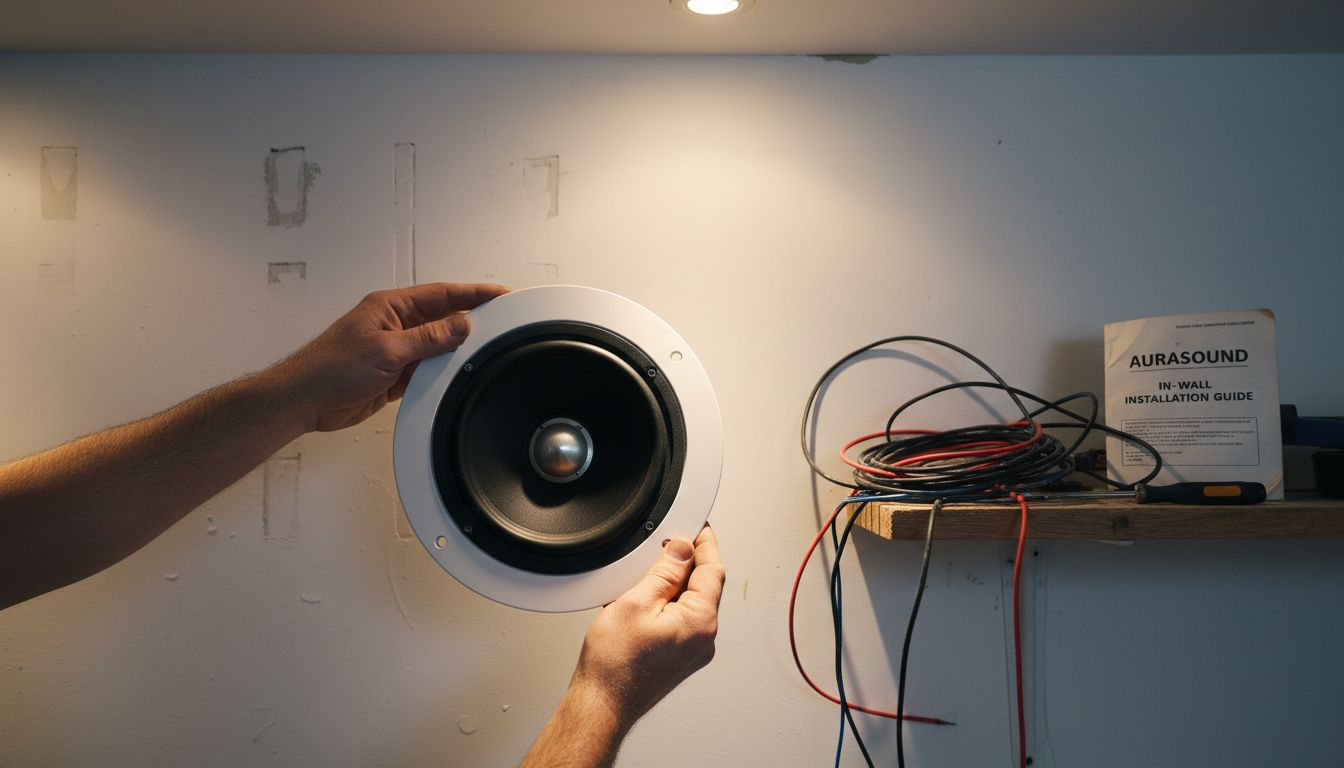
In-wall speakers typically comprise multiple specialized drivers designed to handle different frequency ranges. These include:
Here’s a summary of key in-wall speaker driver types and their roles:
| Driver Type | Frequency Range Covered | Main Effect on Sound |
|---|---|---|
| Woofer | Low frequencies | Powerful bass and depth |
| Mid-range | Central frequencies | Improved clarity for vocals |
| Tweeter | High frequencies | Crisp, detailed treble |
| Subwoofer | Deepest bass | Impactful low-end for movies/music |
- Woofers: Produce low-frequency bass sounds
- Mid-range drivers: Handle central audio frequencies
- Tweeters: Reproduce high-frequency sounds
- Subwoofers: Deliver deep, powerful bass
Your selection should align with your room’s acoustics and intended audio experience. Loudspeaker driver configurations play a critical role in sound reproduction, with crossover networks ensuring each driver manages its optimal frequency range.
The right speaker type transforms audio from mere sound to an immersive experience.
Acoustic performance varies dramatically based on driver composition and enclosure design. Home theater enthusiasts might prioritize speakers with robust mid-range and bass response, while music purists could prefer designs emphasizing clarity and detail.
Pro tip: Consider purchasing a matched speaker set with consistent driver technology to ensure balanced sound across your entire audio system.
Step 4: Plan the Ideal Placement and Wiring
Successful in-wall speaker installation hinges on meticulous planning of placement and wiring. In-wall speaker positioning requires strategic consideration to ensure optimal sound distribution and minimal acoustic interference.
Your speaker placement strategy should focus on several critical elements:
- Listening zone proximity
- Avoiding structural obstacles
- Symmetrical speaker arrangement
- Maintaining proper height and angle
- Ensuring clear sound projection
Wiring considerations are equally crucial. Cable installation recommendations emphasize the importance of separating different signal types to prevent electrical interference. Key wiring principles include:
- Use high-quality, shielded speaker cables
- Maintain minimum separation between power and audio lines
- Cross cables at right angles when intersecting
- Secure wiring carefully inside wall cavities
Precision in placement and wiring transforms good speakers into exceptional audio experiences.
Before installation, create a detailed blueprint of your speaker locations, ensuring they align with your room’s acoustic characteristics and primary listening areas. Professional installers recommend using a laser level to guarantee precise, symmetrical positioning.
Pro tip: Invest in a stud finder and wire detector to identify safe mounting locations and avoid electrical hazards during installation.
Step 5: Verify Performance Through Testing
The final stage of your in-wall speaker installation is comprehensive performance verification. Speaker verification techniques highlight the critical importance of testing audio systems under realistic conditions to ensure optimal sound reproduction.
Your testing protocol should encompass multiple evaluation methods:
- Frequency response assessment
- Stereo imaging verification
- Distortion level measurements
- Sound clarity evaluation
- Volume range testing
Sound test procedures can be conducted using various approaches. Online sound testing tools provide convenient methods for checking speaker functionality across different audio scenarios. Recommended testing steps include:
- Play full-range audio test tones
- Test speakers at low and high volume levels
- Check stereo balance and separation
- Listen for any unusual distortions
Thorough testing transforms a good speaker installation into an exceptional audio experience.
Consider using reference music tracks you know intimately to evaluate subtle nuances in sound reproduction. Professional installers recommend using tracks with complex instrumental arrangements to reveal potential audio imperfections.
Below is a quick guide to testing methods and what each reveals about your speaker system:
| Test Method | What It Evaluates | Typical Indicator |
|---|---|---|
| Frequency Sweep | Overall range and response | Detects gaps or peaks |
| Stereo Imaging Demo | Sound staging and placement | Reveals channel separation quality |
| Distortion Analysis | Purity at different volumes | Finds unwanted noises or artifacts |
| Reference Track Listening | Real-world audio accuracy | Assesses musical detail retention |
Pro tip: Use professional-grade audio test files with specific frequency sweeps to comprehensively assess your in-wall speaker system’s performance capabilities.
Elevate Your Home Audio with Expert In-Wall Speaker Solutions
Choosing the perfect in-wall speakers involves understanding your room’s unique acoustics, mastering sound quality priorities, and planning precise placement and wiring to achieve an immersive audio experience. If you find yourself navigating complex decisions like driver types, frequency response, or wiring strategies, you are not alone. Many homeowners struggle with turning technical concepts into a stunning, balanced sound environment that transports them into every movie or music moment.
At Atlanta Home Theater, we specialize in transforming these challenges into seamless solutions. Since 1996, our expert team has crafted custom home theater and whole-home audio systems tailored to your personal preferences and space. Whether you want precision sound staging, crystal-clear mids and highs, or deep impactful bass, our professionals use proven techniques outlined in our Sound Advice Archives – Atlanta Home Theater to ensure every detail complements your lifestyle and home.
Take the next step now and experience how true sound immersion feels by scheduling a consultation today with Atlanta Home Theater. Visit https://atlantahometheater.com to start designing your ideal home audio system that delivers unparalleled clarity and elegance.
Frequently Asked Questions
How do I assess my room size for installing in-wall speakers?
To assess your room size for in-wall speakers, measure the length, width, and height of the room. Consider strategic planning to determine speaker placement, noting areas where sound will be most effective, such as primary listening zones.
What sound quality factors should I prioritize when choosing in-wall speakers?
When selecting in-wall speakers, prioritize frequency range coverage, bass response, clarity, and stereo imaging. Identify your primary listening goals, whether for music, movies, or casual listening, to help you focus on the right sound characteristics for your needs.
What types of in-wall speakers are available, and how do they differ?
In-wall speakers come in various types, including woofers for low frequencies, mid-range drivers for central audio, tweeters for high frequencies, and subwoofers for deep bass. Understanding these types is essential for matching the speakers to your room acoustics and audio preferences.
How should I plan the placement and wiring of my in-wall speakers?
For optimal sound distribution, plan your speaker placement by considering the proximity to the listening zone and avoiding obstacles. Ensure that wiring is high-quality and properly separated from power lines to reduce interference.
What testing methods can I use to verify the performance of my new in-wall speakers?
To test the performance of your in-wall speakers, conduct a frequency response assessment, verify stereo imaging, and listen for distortion levels. Play a variety of test audio at different volumes to gauge clarity and sound quality effectively.
Can I use reference tracks for evaluating my in-wall speaker installation?
Yes, using reference tracks you know well is highly effective for evaluating your in-wall speaker installation. Choose tracks with complex arrangements to identify subtle sound quality variations and ensure you’re achieving the audio experience you desire.